
On March 31, Anthropic accidentally exposed a large chunk of Claude Code’s internal TypeScript codebase after a source map file was shipped in a public npm release. The company said it was a packaging error caused by human error, not a security breach, and that no sensitive customer data or credentials were exposed.
The exposed source map reportedly contained around 512,000 lines of code across roughly 1,900 files. That distinction matters. But it doesn’t make this small news.
Claude isn’t some side project buried in a developer forum. Anthropic has described itself as the market leader in enterprise AI and coding, and Claude Code sits inside a company that’s become one of the most prominent names in the AI market.

So when code from a production AI system like this spills into the open, the story stops being about a routine release mistake almost immediately.
That’s also why the response moved so quickly from curiosity to analysis to experimentation. Developers weren’t just gawking at a leak. They were reading it, testing it, comparing notes, reverse engineering features, and trying to understand how a major AI coding system actually works once you get past the polished interface.
That’s the real weight of this event. It wasn’t just source code that got exposed. It was the system around the model.
What Actually Happened And Why It Spread So Fast
The technical cause appears to have been simple enough. According to Trend Micro’s write-up, Anthropic’s @anthropic-ai/claude-code package version 2.1.88 accidentally included a 59.8 MB JavaScript source map file, cli.js.map, generated by the Bun bundler.
Because the file contained embedded sourcesContent, it exposed the original TypeScript source tree.
That would’ve been bad enough on its own. What pushed it further was the completeness of what was exposed and how easy it was for other people to copy, inspect, and redistribute it. Users quickly noticed the file, started pulling it apart, and began sharing what they found across X, Reddit, and GitHub.
The Verge reported that a GitHub repository containing the copied code amassed more than 50,000 forks. Once something reaches that level of spread, cleanup becomes more about damage control than containment.
Anthropic moved to contain the leak through takedowns, but that came with its own problems. TechCrunch reported that the company’s DMCA effort swept across thousands of GitHub repositories and even caught legitimate forks of Anthropic’s own public repository. That’s the part of this kind of incident.
Once code has been copied, mirrored, and rewritten into other forms, it becomes very hard to pull the whole thing back into the box.
No customer data or credentials were exposed, and the leak didn’t include the Claude model weights themselves. That’s important, and it should be stated clearly. But it doesn’t mean the incident was minor. It means the value of what leaked sits somewhere other than the model.
Why This Isn’t Just Another Source Code Leak
Source code has always been valuable. Competitors can study it. Attackers can study it. Engineers can learn from it. None of that’s new.
What makes this different is the kind of software involved.
Claude Code isn’t just an application with a user interface and a bit of backend logic. It’s a production AI system. That means the exposed code offers insight into prompts, tool definitions, workflow handling, memory-related behaviour, permission logic, and the orchestration that turns a base model into a usable coding assistant.
That’s a much richer kind of visibility than simply seeing how a normal application routes requests and renders output.
When AI Theft Meets Geopolitics
Anthropic’s claims against Alibaba show how model scraping is reshaping export controls, sanctions policy and AI vendor due diligence.
That matters because raw model capability is only part of the product experience. The surrounding system shapes what the model can access, how it behaves, how it remembers, when it asks for permission, how it uses tools, and how reliably it works in a real development environment.
A leak like this doesn’t just show what Claude Code is built with. It shows how its behaviour is produced.
That’s why developers didn’t treat this like a standard “oops, proprietary code escaped” moment. A lot of them immediately went after the orchestration layer. They wanted to understand the query engine, the coordinator logic, the tool system, team management, context handling, and everything else that turns a frontier model into a practical coding workflow.
What Developers Are Actually Paying Attention To
The loudest headlines focused on the leak itself. The more interesting story sat in what developers chose to do next.
They didn’t all rush to clone Claude Code line for line. A lot of the conversation moved toward understanding the system, pulling apart its behaviours, and using the leak to explain why Claude Code works the way it does or why it sometimes doesn’t.
Understanding how the system is structured
A big part of the discussion has centred on prompts, tools, workflows, coordinator logic, and context management. Developers are trying to map how the pieces interact rather than just reading code in isolation.
One Reddit thread on LocalLLaMA framed the leak in exactly those terms, pointing to the query engine, tool system, coordinator mode, and team management as the interesting parts.
Another commenter in the ClaudeAI megathread said they were less interested in “rebuilding Claude Code” than in studying the context management internals to understand token burn and system behaviour.
That reaction tells you a lot about where technical readers think the value is. They aren’t treating the leak as proof that a great model is all you need. They’re treating it as evidence that the surrounding architecture is where much of the product differentiation actually lives.
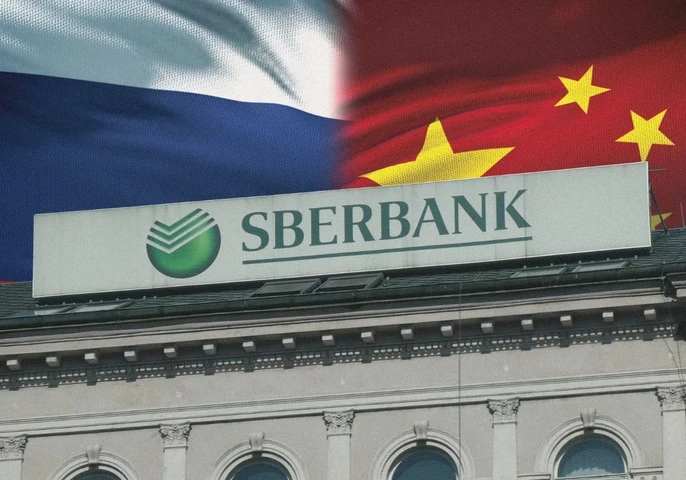
Inside GigaChat’s China Chip Bet
Russia’s flagship LLM pivots to Chinese silicon, revealing how AI ambitions now hinge on constrained compute and alternative supply chains.
Experimentation and reverse engineering in real time
Developers also moved quickly from reading to doing. Some started extracting pieces of the orchestration logic into open-source frameworks intended to work with other large language models. Others began testing patches, workarounds, and behaviour tweaks based on what they found in the leaked code.
The megathread is full of examples of people discussing fixes, reverse engineering features, and trying to understand performance quirks by looking under the hood.
That’s made the story unusually dynamic. This isn’t one of those leaks that gets written up, archived, and forgotten. It’s become a live reverse-engineering exercise taking place in public, with people learning from the code in real time.
It’s also created obvious risk. The moment leaked code starts circulating, people begin downloading things they shouldn’t, trusting repos they haven’t checked, and running packages they don’t understand.
That part became especially dangerous here because the broader ecosystem was already dealing with another serious supply chain issue at the same time.
Why the “novelty features” matter more than they look
It would be easy to dismiss the Buddy pet system and KAIROS always-on agent references as internet bait. They’re the kind of details that spread fast because they’re vivid, weird, and easy to screenshot.
The Verge reported that users digging through the leak found a Tamagotchi-like pet, memory architecture clues, and a KAIROS feature that appears to point toward an always-on background agent. Reddit users then went further, documenting the pet system’s logic, rarity mechanics, and related behaviour.
But those details aren’t just fluff.

Managing GPT-5.6 Safety Risks
What stricter safeguards, red teaming and policy delays reveal about governing advanced models in security and high-risk domains.
They reveal how Anthropic is thinking about interaction design, persistence, memory, and assistant behaviour inside Claude Code. They also show developers how Anthropic is trying to shape the user experience around the model, not just what the model can answer in a vacuum.
In other words, the so-called novelty features matter because they expose product thinking. They hint at how Anthropic expects people to work with the tool, what kinds of persistent agent behaviour it’s building toward, and how the company thinks about making the system more sticky, more engaging, and more useful over time.
That’s exactly the kind of thing developers and competitors both want to understand.
The Security Picture Is Bigger Than “No Breach”
Anthropic’s “no breach” framing is technically important. It helps distinguish this incident from a compromise involving stolen data or unauthorised intrusion. But it doesn’t close the security discussion.
It only narrows one part of it.
Architectural visibility and future attack paths
The exposed code gives outsiders a clearer view of tool use, permission handling, validation logic, and workflow structure. The Verge cited Gartner analyst Arun Chandrasekaran, saying the leak creates risks by giving bad actors possible ways to bypass guardrails.
That doesn’t mean attackers can suddenly break Claude Code tomorrow because they saw the source. It means they now have a better map of where to look.
That matters more in AI systems than many people realise. Once attackers understand how a system chooses tools, handles permissions, manages prompts, and applies validation, they’re in a better position to search for weak control points and pressure those points over time. The leak didn’t create that attack surface. It made it easier to study.
Behavioural insight and system manipulation
The same logic applies to behaviour. Seeing system prompts, workflow logic, and memory-related structures can make a system more predictable to anyone trying to manipulate it. Predictability isn’t always bad. In enterprise settings, it can be useful.
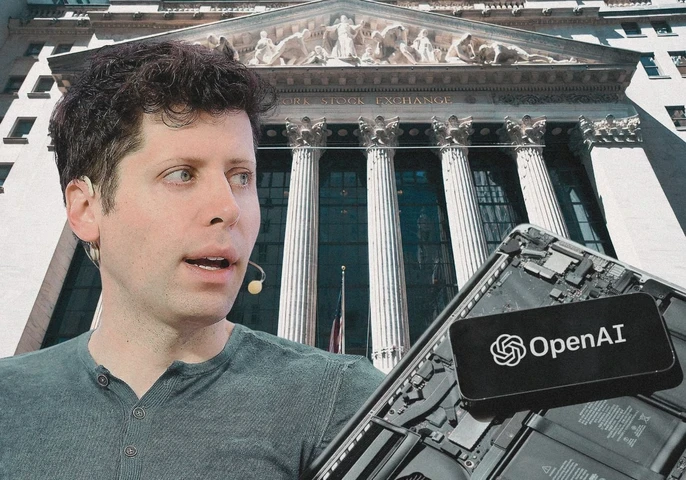
When AI Giants Hit Public
OpenAI, Anthropic and SpaceX line up trillion-scale IPOs, forcing boards to rethink AI exposure, deal timing and concentration risk.
But in adversarial settings, predictability helps people work out how to steer outputs, pressure tool use, or bypass intended controls.
That’s one reason the orchestration layer matters so much. If you understand the scaffolding around the model, you’re often much closer to understanding how to influence the system than you’d be from model performance benchmarks alone.
The “perfect storm” around the Axios malware incident
There’s another security thread here that shouldn’t be skipped.
At almost the same time developers were scrambling to inspect leaked Claude Code artefacts, the npm ecosystem was dealing with a separate Axios supply chain compromise. Microsoft reported that on March 31 two malicious Axios package versions, 1.14.1 and 0.30.4, were identified after being injected with a malicious dependency.
Trend Micro likewise reported that Axios was compromised through a maintainer account takeover and that the malicious versions deployed a cross-platform remote access trojan.
These two incidents weren’t the same event. But the timing created exactly the kind of chaos that gets people hurt.
Trend Micro’s Claude Code follow-up looked at how threat actors rapidly weaponised the attention around the leak, using fake Claude Code lures and GitHub releases to spread malware. In the ClaudeAI megathread, users were already warning each other about suspicious repos and outright scams masquerading as the leaked source.
That’s the part that turns a dramatic AI story into a practical developer security problem. Not because Anthropic leaked malware, but because developers chasing the leak were suddenly moving through an environment full of poisoned lookalikes.
So yes, the official line that there was “no breach” is true. It’s also incomplete. The security picture is broader than the initial release mistake because the leak changed how people behaved, what they downloaded, and what attackers had an opportunity to exploit in the hours and days that followed.
What This Leak Reveals About Where AI Value Actually Sits
This is the part that matters most.
The Claude Code leak didn’t expose the Claude model weights. It didn’t hand the world a copy of Anthropic’s foundational model. Yet developers still treated the leak as hugely valuable. That tells you something important straight away. The value they were chasing was not the model alone.
The model is one layer. The system built around it is another.
That outer layer includes orchestration, tools, context management, memory-like behaviour, workflow logic, validators, permissions, and all the practical structures that make an AI coding assistant feel capable in the real world. That’s what shapes behaviour.
That’s what determines whether the system is clumsy or smooth, expensive or efficient, brittle or reliable. And that’s the layer the leak exposed most clearly. That also explains why replication matters here in a more nuanced way than “people can build their own Claude". They can’t rebuild Claude the model from this leak.
But they can learn how a production-grade AI coding system is stitched together, how behaviour is coordinated, how context is managed, and how useful features are delivered around the model. In practice, that can be more valuable than a lot of people would like to admit.
Because the market is moving beyond raw model comparisons. Plenty of people can access strong models. Fewer can turn them into systems that developers actually want to use all day.
What Enterprise Teams Should Take From This
For enterprise leaders, the immediate temptation is to sort this into the usual boxes. Was data exposed? No. Was there a breach? No. Was the model stolen? No. Move on.
That would miss the point.
AI tools aren’t just models wrapped in branding. They’re systems. If your teams are evaluating coding assistants, agent platforms, or other enterprise AI products, the questions that matter aren’t limited to benchmark scores and demo quality.
They also include how the system handles tools, how it manages permissions, how much context it sees, how behaviour is controlled, how it integrates into workflows, and what happens when something goes wrong in the delivery pipeline.
This leak also gave enterprise buyers a rare look at how much of the user experience depends on logic outside the model itself. That should influence how these tools are assessed. A vendor can have an excellent model and still deliver a weak product if the orchestration layer is messy, expensive, opaque, or difficult to govern.
The reverse is also true. A strong system built around a model can create a much better product than raw model rankings would suggest. Trust sits in that gap. Not in a benchmark chart. Not in a slogan about safety. In behaviour. In control.
In how the system actually works when it’s connected to your code, your workflows, and your people.
Final Thoughts: AI Value Is Built Around The Model, Not Inside It
The Claude Code leak wasn’t just a glimpse into Anthropic’s internal code. It was a glimpse into how a modern AI system actually becomes useful.
That’s why developers didn’t stop at the headline. They went straight for the prompts, the workflows, the tool system, the memory clues, the orchestration logic, and even the odd little features that reveal how the product is meant to feel in use.
They understood, correctly, that the most interesting part of the leak was not the fact that code escaped. It was the fact that the system around the model became visible.
Security risk sits there. Product value sits there. Competitive differentiation sits there too.
And as AI products mature, that outer layer is likely to matter more, not less. The companies that win won’t just be the ones with powerful models. They’ll be the ones that build the best systems around them, govern them well, and make them trustworthy enough to live inside real enterprise work.
That shift is exactly why these stories matter. EM360Tech will keep following them where they get most interesting, at the point where engineering detail starts to shape enterprise reality.


Comments ( 0 )