
There is a sense that technology leaders worldwide have their feet sinking. The cycles of release continue to decrease, talent is limited, and customer expectations are in real-time. At the same time, the artificial intelligence tools, which only three years ago were considered experimental, are now integrated into all modern IDEs, pipelines, and cloud platforms.
We are now witnessing a new wave of software development, which is sometimes referred to as AI-driven software development, that is slowly ejecting the painstaking, stage-gated approaches with which we all grew up. Working in the banking sector to the digital transformation of the energy industry, teams are finding out that delegating machine-routine coding, testing, and optimization tasks is no longer a luxury but a necessity to survive.

What Is AI-Assisted Software Development
At its simplest, AI assisted software development pairs human intent with machine learning models that can generate, refactor, and validate code in seconds. Think of it as having a tireless pair programmer who has read every public repo, API doc, and vulnerability advisory published on the internet.
Tools such as GitHub Copilot, Amazon CodeWhisperer, and JetBrains AI are the public face of the movement, but they are only the tip. Inside most hyperscale clouds, you now find service catalogs filled with pretrained language, vision, and graph models ready to be called from build scripts. A fast-growing AI-augmented software development company may wire these models into customized microservices that watch Jira tickets, generate pull requests, open test coverage gaps, and even write the release notes.
The result is not a robot that replaces the engineer. It is an amplifier that frees humans to focus on domain logic, product differentiation, and user empathy. And because the models learn from every interaction, the amplifier keeps getting louder.
Limitations of Traditional Software Development Models
Waterfall, V-model, and even vanilla Agile were designed when computing was expensive and requirements changed slowly. They hard-code hand-offs: business analysts write documents, developers implement, and QA signs off. The model assumes each group has the full context needed to make good choices. Reality rarely cooperates.
Today, product requirements pivot weekly, threat landscapes mutate hourly, and zero-day vulnerabilities spread within minutes. Manual code reviews cannot keep pace with ten-branch feature work. Regression suites that run overnight look quaint next to continuous deployment that ships on every commit.
Cost is another drag. Senior engineers spend an estimated 30% of their time hunting for best-practice snippets, boilerplate, or bug patterns that machines can now surface instantly. Multiply that by hundreds of engineers, and you understand why CFOs are frustrated.
AI-Driven Software Development Explained
AI-driven software development weaves artificial intelligence through the entire value stream. Large language models (LLMs) are predictors of code tokens and unit tests, as well as docstrings. Security risks are categorized using deep learning models. Graph neural networks provide dependency risk mapping between services. Computer vision models check the screenshots of the UI to confirm the visual regressions.
The magic happens when these specialized models fly in formation. In modern build pipelines, a commit triggers AI-driven software development automation that provisions test environments, writes missing tests, instruments observability hooks, and even allocates the correct cloud resources. By the time a human reviewer looks at the change set, half the cognitive load has been lifted.
Crucially, everything is feedback-driven. Models capture telemetry from production, cross-reference incidents, and nudge developers inside their IDE with proactive fixes. You start to see fewer “post-mortems” and more “pre-mortems,” where potential failures are removed before users ever notice.

When AI Theft Meets Geopolitics
Anthropic’s claims against Alibaba show how model scraping is reshaping export controls, sanctions policy and AI vendor due diligence.
AI-Augmented Software Development vs Traditional Approaches
Comparing old and new side by side clarifies why the migration feels inevitable. Traditional approaches rely on documents and checklists to encode knowledge. AI-augmented software development captures that knowledge in executable models that run at machine speed.
Need a compliance report? The AI model pulls dependency trees, CVE data, and license clauses, then composes the document in minutes. Under the traditional model, a team might spend a sprint collecting this evidence. Debugging follows the same pattern. Log aggregation plus anomaly detection spots an edge-case memory leak days before customer support opens a ticket.
The metrics are stark. Controlled experiments and research on GitHub Copilot show that developers using AI coding assistants can complete programming tasks significantly faster, in some studies up to 55% faster on routine tasks and code generation, which supports the idea that AI can materially reduce time spent on boilerplate code and routine development. Start-ups with ten engineers now out-ship enterprises with fifty because their pipelines lean on AI-augmented software development instead of manual reviews.
Inside GigaChat’s China Chip Bet
Russia’s flagship LLM pivots to Chinese silicon, revealing how AI ambitions now hinge on constrained compute and alternative supply chains.

AI-Augmented Software Engineering in Practice
Let’s ground the concept in one familiar vertical: the digital transformation in the energy industry. A utility monitors thousands of IoT sensors on wind turbines. Anomaly-detection models flag vibration spikes. Those same models create Jira issues with suggested firmware patches. Inside the repo, AI-augmented software engineering agents draft the C++ hotfix, link to the relevant sensor library, and spin up simulation tests using historical data.
A human firmware engineer reviews the patch, makes two strategic tweaks, and merges. AI assisted software engineering bots then generate over-the-air update manifests and schedule rollout windows based on predicted power-demand curves. What used to be a three-week cycle collapses into two days.
The same playbook applies to customer-facing portals, trading systems, or edge analytics gateways. Wherever there is code and data, AI-driven software development automation can shoulder repetitive tasks while humans focus on system-level thinking.
Key AI-Driven Software Development Trends
2026 is already rich with AI-driven software development trends worth tracking.
First, multi-agent orchestration. Instead of one monolithic LLM, teams chain specialized agents - security, performance, cost - to debate a pull request and surface the best answer.
Second, retrieval-augmented generation (RAG). Outputs are made context-aware and meet internal standards by grounding LLMs using curated knowledge bases in corporations. This architecture will take over AI-enhanced software development in 2027.
Third, fine-tuning to ensure privacy. The federated learning and differential privacy allow businesses to use sensitive codebases to train models without exposing IP. This opens the AI-powered software development trends even in controlled fields such as healthcare and defense.
Finally, we see real-time co-simulation. Coding assistants can spin up a container, run the new microservice against live traffic samples, and predict how latency, carbon footprint, and cost profiles shift before you merge to main.

Managing GPT-5.6 Safety Risks
What stricter safeguards, red teaming and policy delays reveal about governing advanced models in security and high-risk domains.
AI-Assisted Software Delivery and Productivity
Speed measures are the most eloquent. The teams can measure the lead time in hours, rather than days, with AI assisted software delivery pipelines. Story points are not volatile since machines do not estimate effort on gut feel, but on historical similarity.
Developers also report higher satisfaction. Mundane tasks like writing mocks, updating Swagger files, or localizing strings drop off their to-do list. AI-augmented engineering bots fill those gaps automatically, freeing people to do creative problem-solving.
The financial payoff is equally palpable. Reports on AI‑powered cloud optimization note that automating rightsizing, idle resource shutdowns, and autoscaling can recover 20%-35% of cloud spend by eliminating waste and over‑provisioning. Multiply that across multi-million-dollar workloads, and the ROI sells itself.
Best Practices for AI-Assisted Software Development
Even the best models need guardrails. Below are the AI assisted software development best practices we see succeeding across industries.
Curate high-quality prompts and keep them version-controlled. A sloppy prompt can introduce security flaws as easily as a sloppy API call.
Run multi-model voting for critical code paths. Diversity in models reduces the chance of systematic bias.
Embed explainability hooks. When AI-generated code passes CI, require the assistant to add a rationale comment so future maintainers understand intent.
Treat models as dependencies. Pin versions, monitor performance drift, and budget time for retraining.
Follow these AI assisted software development best practices, and your risk profile stays manageable while your velocity climbs. They also mesh well with AI assisted software engineering patterns such as automated threat modeling and chain-of-trust logging - core for regulated sectors. Finally, remember to wire these rules into your AI assisted software delivery pipeline so compliance is automatic, not an afterthought.
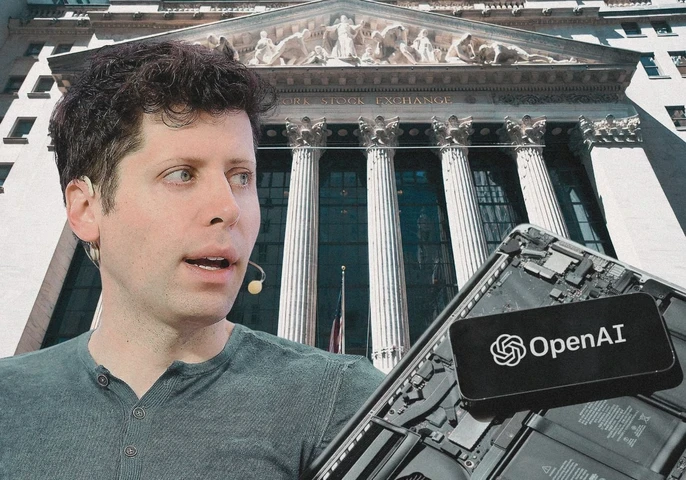
When AI Giants Hit Public
OpenAI, Anthropic and SpaceX line up trillion-scale IPOs, forcing boards to rethink AI exposure, deal timing and concentration risk.
Future of AI-Augmented Engineering
Looking forward, the line between design, code, and runtime keeps blurring. In many green-field projects, a business analyst will soon describe a user story in natural language and see a working prototype minutes later. Engineers then evolve that prototype, refactor the architecture, and harden security, but the scaffolding will arrive pre-built.
As models grow truly multimodal, AI-augmented engineering will integrate text, diagrams, logs, and production metrics into a single conversation window. A model could watch an incident unfold, correlate root causes across stack traces and Prometheus counters, and propose a one-line fix. Humans confirm, pipelines run, and the incident closes.
We are also entering an era of continuous compliance. AI-augmented software engineering agents monitor new regulations in real time, cross-check them against running code, and flag violations before audits. The conversation shifts from “What went wrong?” to “What might go wrong next week, and how do we prevent it?”
Conclusion
Ten years ago, with cloud computing, the days of hardware procurement were reduced to several minutes. The same is now being done on human cognition within the software lifecycle through AI-enhanced software development. Those teams that have adopted AI-augmented software development is developing faster, safer, and at a cheaper cost than their counterparts, who continue to remain fixed on manual pipelines. The instruments are well-established, the payback is established, and the engineering labor market is already favoring those engineers who are proficient in timely crafting and model orchestration.
If your roadmap still depends on yesterday’s hand-offs, the window for competitive parity is closing. It is time to pilot, measure, and scale these new capabilities before your competitors, partners, or regulators force the issue.



Comments ( 0 )