
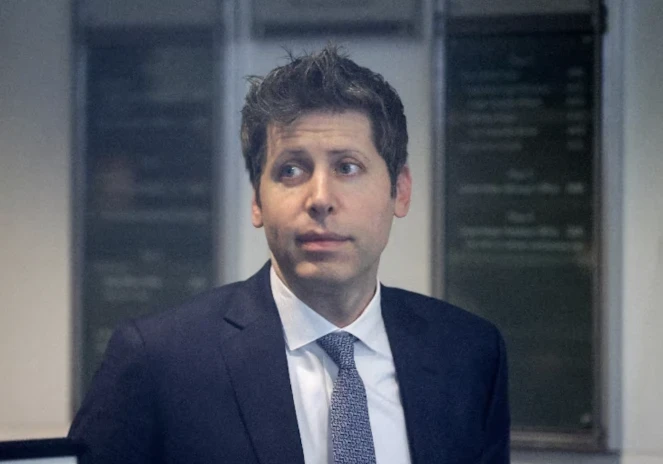
OpenAI CEO Sam Altman has drawn a clearer line between his company and Anthropic on one of the biggest questions surrounding advanced AI: how much risk should society be willing to accept? Speaking to POLITICO, Altman argued that some harmful outcomes are an unavoidable cost of keeping powerful AI widely available.
He also directly contrasted OpenAI's approach with Anthropic, saying there's still “a lot of daylight” between the two companies on AI regulation. The distinction is important because the two AI companies aren't divided over whether increasingly powerful models create serious risks.
Both have pushed for stronger safeguards as those capabilities grow. Instead, Altman's comments point to a more difficult disagreement over acceptable AI risk, and when preventing harm justifies restricting access to the technology.

Altman Says Some AI Risks Are Worth Accepting
Altman's argument starts with the benefits he expects AI to deliver and the importance of making those benefits widely available. “We believe that the world should accept some bad things happening for the benefits of this technology and people having the agency,” Altman told POLITICO, according to Reuters.
That doesn't mean OpenAI believes every possible consequence of advanced AI should be tolerated. Altman distinguished between harmful outcomes that could come from broad access to the technology and catastrophic risks, including losing control of highly capable AI systems.
But trying to prevent every scam, cyber attack or other misuse would require restrictions of its own. Altman's concern is what happens when preventing those harms means giving a small number of organisations control over who can use the most powerful AI.
He described an alternative approach where an AI system becomes incredibly powerful, but remains controlled by “a single lab in San Francisco” that decides how its benefits are distributed. Altman said he understands the argument for that level of control, but doesn't believe the trade-off is worthwhile. That position is also reflected in OpenAI's wider policy.
Its public policy agenda lists “democratisation” as one of the company's five core principles and says OpenAI will resist AI concentrating power “in the hands of the few”. It also commits the company to making its technology “freely and safely accessible”.
OpenAI And Anthropic Agree On The Danger, But Not The Response
Altman's comments don't place OpenAI on one side of an AI safety debate and Anthropic on the other. OpenAI has been moving towards stronger regulation as AI becomes more capable. In September, the company called for mandatory national safety requirements for advanced AI systems, alongside independent safety assessments and standards for AI auditors.
Anthropic also expects increasingly capable AI to require increasingly strong safeguards. Its Responsible Scaling Policy is designed around emerging risks from frontier models, with protections changing as the capabilities and potential dangers of those systems grow. Where the companies begin to separate is how far those safeguards should eventually go.
Anthropic's Advanced AI Framework proposes a regulatory system that becomes more restrictive as AI risk increases. At its highest levels, the company believes governments should have the legal authority to block or deter the deployment of AI systems considered dangerously capable. OpenAI isn't rejecting stronger controls either.
Its own policy agenda identifies frontier AI safety as a national security and public safety issue, particularly where advanced models could create cyber or chemical, biological, radiological and nuclear risks. The disagreement Altman is describing is therefore narrower, but arguably more consequential.
The question isn't whether powerful AI should have safeguards. It's how much harm society should tolerate before those safeguards become restrictions on access.

When Access Isn’t Inclusion
Why digital strategies must move beyond coverage metrics to measure skills, trust, identity, and AI readiness as core participation outcomes.
The AI Safety Debate Is Moving Beyond Zero Risk
For enterprises adopting increasingly capable AI systems, that difference could eventually shape what those systems are allowed to do. A more restrictive approach could mean tighter access controls, additional evaluations or limits on particularly powerful capabilities before they reach customers.
A model built around broader access may allow more capability to reach users while relying on safeguards to keep the remaining risk within acceptable limits. Neither approach promises zero risk. Anthropic itself says advanced AI could deliver significant benefits across areas including science, healthcare and education, while its safety policies focus particularly on preventing catastrophic harm.
OpenAI is making a similar calculation, but Altman's comments make its threshold clearer. The company believes there are harmful outcomes society may need to accept if the alternative is concentrating control of powerful AI among a small number of institutions.
As AI models become more capable, that leaves OpenAI and Anthropic debating something more complicated than whether AI can be dangerous. They're increasingly defining how dangerous is too dangerous, who gets to make that decision and what society should be willing to give up in return for greater safety.

Comments ( 0 )