
The EM360Tech Q3 2026 Quarterly Impact Index nominees have been announced, and voting is now open.
The Quarterly Impact Index is EM360Tech's benchmark for enterprise thought leadership performance. It is built around one simple idea: we don't measure content by views. We measure it by how impactful the content is.
That distinction matters because enterprise technology audiences already have more content than they can consume. What matters is whether a podcast, campaign or analyst perspective helps people understand a changing problem, challenge an assumption or make a more informed technology decision.
For Q3 2026, the EM360Tech Quarterly Impact Index recognises nominees across four distinct categories: the Vanguard Award, Apex Award, Catalyst Award and Authority Award.

Each category examines a different form of enterprise thought leadership impact, from originality and podcast performance to multi-channel campaign execution and analyst influence.
Making the voting public gives the wider EM360Tech community a pivotal role in recognising the work they feel made an impact in this quarter.
AI Moves From Experiment to Reality
This quarter’s shortlist showcases a distinct shift in what’s being discussed in the enterprise technology domain.
AI’s role in conversations is no longer centred around model capability or experimentation. Across this quarter's nominees, the conversation has moved onto how to make AI work in real life enterprise spaces by focusing on the systems, workflows, infrastructure, security and people required to do so.
Nominee conversations have ranged from how to scale AI across business processes and using AI to reshape semiconductor design, to managing the demands that are being placed on existing infrastructure as a result of always-on AI agents.
Other nominees explored what happens when AI’s influence extends into customer experience, talent management and security operations.
The result is a shortlist that spotlights the burning question facing enterprise leaders today: what needs to change in organisations to turn AI technology capability into something that can realistically be operated, governed and trusted?
That makes this Q3’s Impact Index less about AI as an isolated technology and more about improving and elevating the enterprise systems surrounding it for seamless integration.
EM360Tech Vanguard Award Nominees

The EM360Tech Vanguard Award recognises the most innovative or forward-thinking individual podcast recording of the quarter.
The category explores factors like originality, clarity of insight and valuable contribution to the wider enterprise technology conversation. It is not simply about whether a podcast covers an important subject. It asks whether the conversation approaches that subject in a way that gives enterprise audiences something new to consider.
Vote for the EM360Tech Vanguard Award here
Make
Podcast: Scaling AI Across the Enterprise: From Builders to Business Impact
Make's nominated episode explores a question that is increasingly confronting organisations that have already moved beyond the AI experimentation stage: how do you scale AI across the business instead of leaving it with a small group of technical specialists?
The conversation between Christina Stathopoulos and Sara Maldon, Head of Business Automation and AI at Make, explores automation, agentic AI and scalable workflows. However the focus extends beyond the technology itself. It explores what happens when AI inevitably becomes a part of everyday processes and when employees who are outside traditional development roles need to become involved in building and using AI-powered workflows.
That makes the conversation particularly relevant to organisations trying to move from individual AI experiments towards broader, enterprise-wide adoption. The episode highlights the difference between building an AI agent and successfully embedding it into a process. Adoption, training and full on organisational change become a part of the implementation challenge.
When Vector RAG Stops Working
Why retrieval strategy now hinges on matching Vector, Graph and hybrid RAG to the questions AI must answer across complex enterprise data.
Make thus earns its place among Vanguard nominees with its forward-looking perspective on AI transformation. The episode goes beyond treating AI as a technology that simply needs to be deployed and instead examining how it can become an embedded capability.
Fenix24
Podcast: Ransomware Recovery: Why Immutable Backups May Not Be Enough
Fenix24's discussion challenges one of the assumptions that has traditionally shaped ransomware preparedness: that having fixed or immutable backups means an organisation can recover in case of a security incident.
The conversation focuses on what happens AFTER ransomware has already compromised an enterprise’s environment. It examines recoverability focusing on factors like survivability, completeness, speed and assurance. It also highlights the dependencies that can sit underneath seemingly protected data.
This issue is particularly important for enterprise audiences because recovering a critical application is not always as simple as restoring data. Identity systems, infrastructure, applications and their dependencies can all affect whether full recovery is possible.
This episode moves the ransomware conversation beyond prevention and on to a more fundamental question: can the organisation demonstrate that it can recover? By shifting the focus from mere prevention to recovery capability, the episode offers a distinctive perspective on cyber resilience and is why it earned its place as a Vanguard nominee.
Expel
Podcast: Is Your SOC Below AI Poverty Line?
Expel's nominated episode examines the rising divide between organisations that have the ability to effectively use AI in security operations and those that cannot.
The discussion between Brad LaPorte and Expel CTO Greg Notch explores how AI is changing the speed with which security operates, as well as the balance between automation and human judgement. Rather than presenting AI as a replacement for security professionals, the conversation posits an environment where automation can either assist or act autonomously and in which areas human oversight remains important.
Inside the Agentic SOC Stack
See how unified telemetry, correlation engines and agentic AI workflows rebuild SOC architecture for autonomous detection and response.

This question has become increasingly relevant as attackers are now using automation to move faster and security teams face pressure to respond at the same pace as they attack. The episode also addresses the role that trust plays: organisations need to decide not only what AI can do, but what they are prepared to allow it to do.
By connecting the dots between AI capability, security operations, risk and human oversight, Expel's episode contributes to a broader conversation about what the AI-enabled SOC will actually look like.
EM360Tech Apex Award Nominees

The EM360Tech Apex Award recognises the individual podcast of the quarter that statistically performed the best.
Apex spotlights factors such as engagement, reach and commercial impact. But performance is only one part of the story. The nominated conversations should also have given enterprise audiences a reason to sit up and pay attention.
Vote for the EM360Tech Apex Award here
Observe.AI
Podcast: CX Is Now AI's Proving Ground
Observe.AI's nominated episode examines what happens when agentic AI moves into one of the most measurable areas of the enterprise: customer experience.
The conversation between Observe.AI’s Sneha Iyer and Ravit Jain explores why contact centres are becoming a testing ground for enterprise AI. Customer interactions generate clear outcomes, creating an environment where organisations can assess whether AI is actually improving customer service, efficiency and resolution.
The discussion also moves beyond individual AI tools to examine broader infrastructure, data, governance and evaluation questions. As AI agents take on more responsibility for customer interactions, organisations need to understand not only whether an agent can perform a task reliably, but whether it can do so within the appropriate controls.
That combination makes the conversation particularly relevant to customer experience and technology leaders assessing where agentic AI can deliver measurable value. By connecting AI adoption with the operational questions surrounding performance, governance and customer outcomes, the episode gives enterprise audiences a practical lens through which to assess the technology.
Synopsys
Podcast: How Multi-Die Designs and AI Are Reshaping the Industry
Avoiding The Next AI Winter
Learn why unchecked hype, weak controls, and poor data discipline still threaten AI value, and how leaders can close the gap.
Synopsys' podcast episode explores how the demand for AI is changing the physical infrastructure required to support next-generation computing.
The conversation focuses on the move from more traditional monolithic chips towards increasingly complex multi-die or multi-chip modules. As AI workloads demand more computing power, semiconductor engineering is having to consider architecture, packaging, power, thermal management and interconnects as parts of a wider system.
The discussion also explores how AI itself can help manage that complexity through design automation and agentic workflows.
For enterprise audiences, the significance extends beyond semiconductor engineering. The episode illustrates a broader cycle: AI increases demand for computing, that demand creates greater infrastructure complexity, and AI is then being used to help manage the resulting complexity.
That connection makes the conversation relevant to technology leaders thinking about the infrastructure implications of AI adoption. Rather than treating AI as a software-layer development alone, the episode shows how its growing demands are reshaping the underlying technology stack, giving enterprise audiences a clearer view of the infrastructure decisions that sit behind AI scale.
Imply
Podcast: Handling 24/7 Agentic Query Volume in Observability
Imply's nominated episode focuses on a less visible consequence of agentic AI: the pressure it places on the data foundation beneath enterprise systems.
Unlike human users, AI agents can operate continuously, generating queries 24/7. That changes the scale and performance requirements for observability, security and analytics.
The conversation explores the idea of an "observability warehouse" — separating data storage from the tools used to analyse it. Rather than creating more specialised silos, the discussion considers how organisations can store data in one way while allowing different teams and systems to access it in the ways they need.
The subject connects directly with the infrastructure challenge created by AI adoption. As organisations introduce more autonomous systems, the underlying data architecture becomes increasingly important to whether those systems can operate reliably at scale.
GPT-5.6 and the New AI Stack
How Sol, Terra and Luna reshape choices between capability, cost and speed for enterprise-scale AI deployment strategies.

That makes the conversation especially relevant to technology and observability leaders dealing with growing volumes of machine-generated activity. By putting the data and infrastructure demands of 24/7 agentic workloads at the centre, the episode gives enterprise audiences a practical way to think about whether their existing observability foundations can support the next phase of AI adoption.
EM360Tech Catalyst Award Nominees

The EM360Tech Catalyst Award recognises a campaign that not only delivered a strong performance but did so across multiple channels.
Unlike the above podcast episode categories, Catalyst looks beyond a singular asset. It considers how a campaign connected content, audience engagement, lead generation and wider market relevance to form one coherent message.
Vote for the EM360Tech Catalyst Award here
Thoughtworks
Campaign: Can AI Modernise Legacy Systems?
Thoughtworks' nominated campaign highlights a simple reality: AI may be new, but many of the enterprise systems it depends on are not.
The campaign explores the relationship between AI and legacy maintenance, highlighting that successful transformation involves more than introducing a new AI capability. New systems’ ability to deliver value depends on the legacy technology, processes and organisational structures already supporting them.
This subject is particularly relevant for organisations dealing with long-established technology while simultaneously trying to adopt AI. The campaign connects the promise of AI with the behind-the-scenes modernisation work required to make that promise deliverable.
What gives the campaign its strength is the way it develops this idea beyond a single discussion. By centring the relationship between AI adoption and legacy modernisation, Thoughtworks creates a consistent narrative around the practical foundations required for transformation. That gives the campaign relevance for enterprise leaders trying to understand not only what AI can do, but what needs to change around it for those capabilities to deliver value.
The message also reflects a wider Q3 theme for EM360Tech: AI adoption is increasingly about organisational and infrastructure readiness rather than simply having access to the technology. That combination of a clear central argument and practical enterprise relevance is what makes the campaign a Catalyst nominee.
Multiverse
Campaign: Why AI Transformation Is Really a People Problem
Multiverse's nominated campaign brings a human perspective to the topic of AI transformation.
Rather than treating AI adoption primarily as a technology deployment exercise, the campaign focuses on the skills, organisational culture and capabilities needed for employees to use new technology effectively.
Its central issue is the gap between companies investing in AI technology and actually adopting it. Organisations can acquire AI tools without necessarily changing how employees work or creating the skills needed to use those tools effectively.
The campaign connects that challenge to workforce development and the changing nature of work. Its underlying message is that scaling AI requires organisations to consider people and processes alongside technology.
The campaign's strength comes from building that argument around the human side of transformation rather than treating workforce readiness as an afterthought. By connecting AI adoption with skills, culture and organisational change, it creates a broader conversation about what successful transformation actually requires.
That makes the campaign relevant to enterprise leaders moving beyond questions of which AI tools to buy and towards the more difficult question of how those tools can become part of the organisation. The combination of a clear human-centred thesis and its application to the practical realities of AI adoption gives the campaign its Catalyst distinction.
Eightfold
Campaign: How AI Is Transforming the Talent Lifecycle
Eightfold AI’s nominated campaign examines how AI is changing talent management beyond recruitment alone.
The campaign explores the role AI plays across hiring, workforce planning, skills development and internal mobility, reflecting a change in how organisations think about talent when the jobs people are being hired for are themselves being shaped by AI.
A key theme is the move away from static roles and job descriptions towards more skills-based approaches. As AI changes how tasks and workflows function, organisations need different ways to understand what employees can do and where their skills can be applied in practice.
The campaign also addresses trust and transparency around AI-driven decisions, particularly in areas related to hiring and employee development. That gives the subject a wider organisational dimension: AI can support greater automation in HR, but governance, workforce design and employee confidence also need to be considered.
What makes the campaign stand out is the breadth of that perspective. Rather than positioning AI as a recruitment tool alone, it connects changes in hiring with the wider talent lifecycle, from workforce planning through to skills development and internal mobility. That creates a more complete picture of how AI is reshaping the relationship between organisations, roles and skills.
For enterprise leaders navigating an AI-driven shift in workforce requirements, the campaign therefore provides a practical framework for thinking about talent beyond individual hiring decisions. Its ability to connect multiple stages of the talent lifecycle around a consistent argument gives Eightfold's campaign the breadth and relevance expected of a Catalyst nominee.
EM360Tech Authority Award Nominees

The EM360Tech Authority Award recognises the influence an analyst has had across EM360Tech content during the quarter.
Authority is not tied to a singular asset. Instead, we look across the analyst’s contributions for consistency, depth of insight, engagement and market relevance. How did their perspective contribute to enterprise technology conversations over time?
Vote for the EM360Tech Authority Award here
Kevin Petrie
Vice President of Research, BARC
Kevin Petrie's Q3 nomination reflects a strong level of engagement across EM360Tech's data and AI conversations.
His contributions during the quarter included a video with InterSystems examining the future of healthcare AI, as well as a two-part podcast series with PivotX exploring AI, data foundations and governance.
The InterSystems discussion examines how healthcare organisations are approaching AI adoption while working within heavily regulated environments. His PivotX conversations have explored the role of data governance, synthetic data and operational expertise in building AI systems that can work in the real world.
There is a consistent thread that runs through Petrie’s conversations. He connects emerging AI capabilities to the data, governance and operational foundations needed to make them truly valuable.
His strong engagement with EM360Tech and continued demand for his analyst perspective further support his Authority nomination.
Dr Joe Perez
Senior Systems Specialist & Team Leader, NC Department of Health & Human Services
Dr Joe Perez brings a strong data, analytics and governance perspective to the Q3 Authority shortlist.
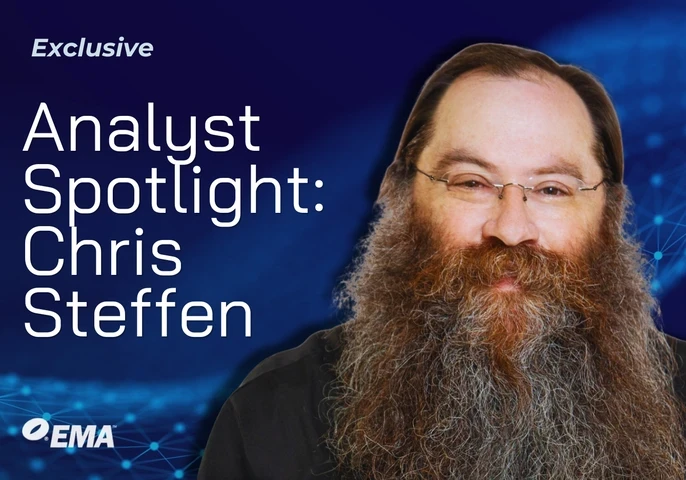
His contribution to EM360Tech during this quarter included an in-depth Analyst Spotlight exploring the relationship between people and technology, with particular attention to AI, data governance, data quality and ethics. The discussion offered a perspective that looked beyond the technology itself to the organisational foundations needed to use it effectively.
That broader perspective is what makes his Q3 contribution significant from an Authority perspective. By connecting AI adoption with governance, understanding, trust and the human factors that shape how technology is used, Perez added depth to current enterprise technology conversations. The Analyst Spotlight demonstrates how a single substantive contribution can build authority when it brings a clear, relevant and well-developed perspective to issues organisations are actively navigating.
Brad LaPorte
Advisor, Lionfish Tech Advisors
Brad LaPorte's Q3 Authority nomination is a reflection of his valued and continuous contribution to EM360Tech's cybersecurity conversations.
His work includes hosting the recent discussion Is Your SOC Below the AI Poverty Line?, which examined what role AI is playing in changing how security operates alongside the balance between automation, trust and human judgement.
The Q3 nomination recognises Brad LaPorte’s contribution to EM360Tech’s cybersecurity conversations during the quarter. His podcast appearance brought an established security perspective to current discussions around AI and security, adding practical insight to questions facing enterprise security leaders.
While the contribution was focused rather than extensive in volume, its value lies in the relevance and depth of the perspective offered. It demonstrates how analyst authority can be built through meaningful contributions that add substance to the conversations enterprise technology audiences are actively navigating.
How Voting for the EM360Tech Quarterly Impact Index Works
Each EM360Tech Quarterly Impact Index category is open for public voting for a period of two weeks.
Public voting gives the wider EM360Tech community a role in recognising this quarter’s nominees, while the shortlist itself is built around the defined criteria for each award.
That distinction matters because the four categories recognise different forms of impact. A forward-thinking podcast, a high-performing episode, a multi-channel campaign and sustained analyst influence cannot all be measured using the same metrics.
The EM360Tech Quarterly Impact Index: What Happens Next?
Once voting closes, the EM360Tech team will announce the Q3 2026 Quarterly Impact Index winners.
Each winner will be celebrated through a dedicated case study exploring the work behind the result and what made it effective. Recognition is only one step in the process. These case studies help build a body of evidence around what effective enterprise thought leadership looks like across podcasts, campaigns and analyst-led conversations as a reference point for others.
Over time, they contribute to a broader benchmark for understanding what impact looks like beyond simple visibility metrics.
Making AI Work Beyond the Hype
This quarter’s nominees are emblematic of a noticeable shift in the enterprise technology conversation. AI is no longer being talked about in terms of what it can do. Questions have evolved to now include what organisations need to change to effectively accommodate it.
Across the Q3 shortlist it has meant looking at everything from infrastructure and data foundations to security, governance, workforce skills, customer experience and organisational change. Different nominees approach the challenge from different angles, but there is a common thread to be found: technology only creates meaningful impact when the organisation is ready to adequately support it.
That scope is what makes this quarter’s shortlist particularly interesting. From individual podcast conversations that challenge established assumptions to campaigns that develop a consistent argument and analyst perspectives that add depth to complex issues, the nominees have demonstrated that effective thought leadership can take varied forms.
Ultimately that is what the EM360Tech Quarterly Impact Index is designed to recognise: it’s not simply about who drew the most attention, but who contributed something useful, relevant and meaningful to the overall enterprise technology conversation.
Voting is now open! Explore the Q3 2026 nominees and have your say in recognising the intellectual work that made an impact this quarter.


Comments ( 0 )