
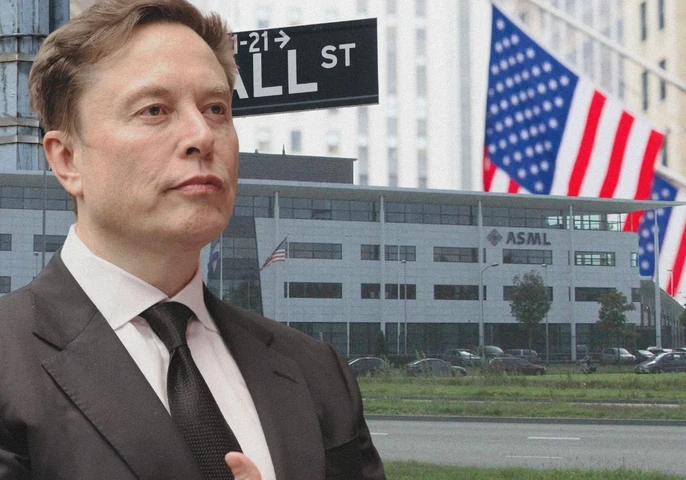
Elon Musk has become the world’s first trillionaire after SpaceX priced the largest initial public offering in history.
The rocket, satellite and artificial intelligence company raised $75 billion through the sale of 555.56 million shares at $135 each, according to Reuters. The IPO values SpaceX at $1.77 trillion, immediately placing it among the most valuable US-listed companies.
SpaceX shares are expected to begin trading on Nasdaq under the ticker SPCX on Friday.

SpaceX Prices Record IPO
The SpaceX IPO has broken the previous record set by Saudi Aramco, which raised $25.6 billion in 2019. Reuters reported that SpaceX’s valuation is now higher than JPMorgan Chase, Berkshire Hathaway, Eli Lilly, Meta Platforms and Tesla.
The deal also gives public investors access to one of the most closely watched private technology companies in the world. SpaceX was founded in 2002 and built its reputation through reusable rockets, government launch contracts, Starlink satellite internet and long-term ambitions around space infrastructure.
The company has also moved deeper into artificial intelligence, following its acquisition of xAI earlier this year. Reuters reported that SpaceX’s IPO filing placed AI at the centre of its future growth story, although the filing also showed the company is still spending heavily and lost money last year.
Investor demand for the listing has been strong. Reuters reported earlier this week that demand was approaching four times the number of shares available, making the IPO one of the most anticipated market debuts in years.
Musk Becomes the World’s First Trillionaire
The IPO has pushed Musk’s net worth beyond $1 trillion, according to Reuters calculations based on company filings.
Before the share sale, Forbes valued Musk’s net worth at roughly $780 billion. Reuters reported that Musk’s SpaceX stake is now worth about $866 billion, with his combined holdings across SpaceX, Tesla and other companies lifting his total net worth above $1.1 trillion once the stock begins trading.
That figure includes stock components that vest over time, meaning the final value depends partly on how SpaceX performs as a public company.
Musk will also retain firm control of SpaceX after the IPO. Reuters reported that he will hold 82 per cent of the company’s voting power, preserving founder control even as the company enters the public markets.
Why Investors Are Paying the SpaceX Premium
The scale of the IPO shows how far SpaceX has moved beyond its original identity as a rocket company.
Starlink, its satellite internet business, now connects millions of consumer, enterprise and government customers across 164 countries, territories and markets. Reuters reported that Starlink currently accounts for most of SpaceX’s revenue.
Its launch business is also dominant. SpaceX said its space operation has been responsible for more than four-fifths of the mass launched into orbit over the past three years. That gives the company a major position in commercial space, defence contracts, satellite deployment and future infrastructure beyond Earth.
But the valuation is not built on current revenue alone. Investors are also betting on future markets that remain highly uncertain, including AI infrastructure, space-based data centres and long-term Mars ambitions.
That is where the risk sits.
What Is Reflection AI? Beam, Nvidia and the Race for Open-Weight AI
Reflection AI’s first open-weight model targets coding and AI agents, while reported talks with Nvidia highlight the strategic importance of more customisable AI systems.
Reuters quoted Kim Forrest, chief investment officer at Bokeh Capital Partners, saying the financial forecasts are uncertain because of the company’s reliance on government contracts. She said investors are “buying into the future” rather than simply investing in a company.
Governance Questions Remain
SpaceX’s listing also puts Musk’s leadership model under a brighter public market spotlight.
Reuters reported that the concentration of influence around Musk has raised concerns about corporate governance, conflicts of interest and the risk of tying company fortunes too closely to one person. Those concerns now matter more because SpaceX will be accountable to public shareholders.
The company’s valuation also depends heavily on what some investors call the “Elon premium.” That refers to the extra value investors appear willing to assign because of Musk’s track record at Tesla, SpaceX and other ventures.
For supporters, that track record justifies confidence. For sceptics, it makes the IPO difficult to judge using traditional financial measures.
SpaceX faces competition from Blue Origin and other commercial space players. It also depends on government contracts, large capital spending and technologies that may take years to become commercially viable.
Inside the New DRAM Power Map
Massive fab buildouts in China and South Korea redraw the memory landscape underpinning cloud, databases and AI training.
A Test for the Next Mega Tech Listing
The SpaceX IPO could become a wider test for public market appetite around large technology listings. Reuters reported that Goldman Sachs expects US IPO proceeds to reach a record $160 billion in 2026, helped by a pipeline that includes SpaceX, OpenAI and Anthropic.
That makes SpaceX’s debut bigger than one company. It is now a market signal for how investors value infrastructure-heavy technology businesses built around AI, communications, data and long-term platform control.
For Musk, the listing marks a personal wealth milestone no one has reached before. For the market, the harder question comes next. SpaceX now has to prove that one of the most ambitious valuations in technology history can hold up in public.


Comments ( 0 )