
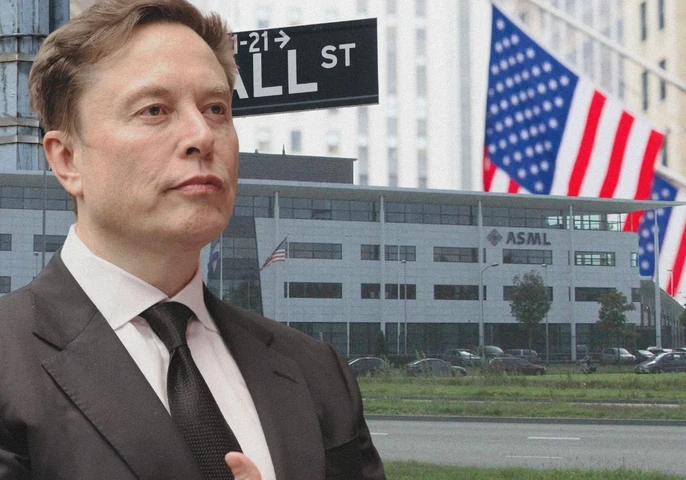
SpaceX, Elon Musk’s private American spaceflight enterprise, is heading to an Initial Public Offering (IPO) with an expected share price of $135. The firm is targeting a valuation of about $1.75 trillion in an aim to make it the largest IPO in history.
A source told Reuters that the Texas-based space company intends to sell 555.6 million shares and plans to raise a “record-setting $75 billion.”
The IPO is in preparation for June 2026, with Nasdaq trading expected soon after. SpaceX, which merged with xAI, Musk’s startup earlier this year, is hoping to kick off its IPO with a big .
In the wave of AI technology, SpaceX's plans to go public could also inspire other stock market debuts and pave the way for firms such as OpenAI and Anthropic to go public.

With the advent of the AI age, SpaceX can be perceived as not only a competitor but as a potential partner in satellite telecommunications, cloud computing, AI compute, edge connectivity, data infrastructure and space networks.
The IPO could open up bigger funding opportunities for Musk’s firm as well as expedite the adoption of enterprise-grade Starlink.
Also Read: SpaceX IPO Filing Reveals a Company Built on Starlink, AI, and Mars
SpaceX IPO Plans to Raise $75 Billion
An Initial Public Offering (IPO) is typically the first public offering, meaning it allows individuals or retail investors outside the respective company to buy shares. However, the SpaceX (SPCX) IPO is fundamentally unique, according to Bloomberg Originals. The American space company, founded in 2002, plans to break conventional rules regarding the criteria, including its size, company structure, retail access, and market impact.
SpaceX is not a regular mid-sized company that usually floats in a public offering. Instead, it's launching as an unprecedented “mega-cap’ tech and aerospace giant, as per Bloomberg Originals.
Given that the privately held American aerospace company SpaceX plans to raise an unprecedented $75 billion, the offering could break the current global IPO record if it succeeds. At its proposed size, the listing would more than double and possibly nearly triple the previous record of $29.4 billion set by Saudi Aramco in 2019.
Musk’s aerospace company will kick off the formal IPO roadshow on Thursday after hosting preliminary “testing the waters” meetings with investors, according to Reuters. A source, however, has cautioned that SpaceX’s fundraising target and final valuation could change depending on investor demand during the roadshow process.
Also Read: Qatar Airways 1st Flight Powered by Elon Musk Starlink Lands In London

What Is Reflection AI? Beam, Nvidia and the Race for Open-Weight AI
Reflection AI’s first open-weight model targets coding and AI agents, while reported talks with Nvidia highlight the strategic importance of more customisable AI systems.
Nasdaq Changes Rules for Musk
Typically, a newly public stock must wait several months to a year, known as a "seasoning period," before it can join major stock market indices. However, Nasdaq changed its rules for SpaceX, giving it a 15-trading-day "fast-track" entry into the Nasdaq-100 index.

ETF Steam reported that Nasdaq updated its "Fast Entry" rules to cut the waiting period for Nasdaq-100 inclusion from three months to just 15 trading days. Additionally, it removed the 10 per cent minimum free-float requirement, ensuring that even thinly floated megacap IPOs can be swiftly integrated into major index funds.
The change means that standard retirement, pension, and ETF funds that track Nasdaq will be legally required to buy tens of billions of dollars in SpaceX stock almost immediately, protecting early investors from significant drops in value.
Also Read: Elon Musk’s Grok AI Model, xAI Now Understands Images
Why is SpaceX IPO relevant to Enterprise Tech?
The SpaceX IPO fundraising would support growth initiatives including Starlink expansion, AI infrastructure, and broader technology ambitions following the company's merger with Musk’s startup, xAI.
While the Starlink satellite internet branch is considered to be quite profitable, the combined company reported a $4.28 billion net loss last quarter. Financial analysts noted that Starlink's profits are being used to support xAI's aggressive hardware and data centre expansion instead of just rocket developments.
Now, the fundraising could boost swift investments in AI infrastructure, satellite connectivity, as well as edge computing.


Comments ( 0 )