
SpaceX is planning to launch a Starlink mobile service for US consumers, according to a Financial Times report cited by Reuters.
The move could bring Elon Musk’s satellite internet business into more direct competition with major US telecoms providers including Verizon, AT&T and T-Mobile. SpaceX has already moved into satellite-to-phone services through its existing partnership with T-Mobile, but the reported plan would push Starlink closer to becoming a consumer mobile provider in its own right.
Reuters said it could not immediately verify the report. SpaceX did not immediately respond to Reuters’ request for comment outside regular business hours.

SpaceX Considers Starlink Retail Mobile Product
According to the Financial Times, SpaceX President Gwynne Shotwell told investors during a recent IPO roadshow that the company is considering launching a Starlink retail product for mobile users.
The company could also build its own terrestrial US mobile network, the report said, citing people familiar with the matter.
That would mark a significant shift for Starlink. Until now, its mobile work has centred largely on partnerships with mobile network operators, where Starlink satellites are used to extend coverage into areas traditional cell towers don’t reach.
T-Mobile currently offers T-Satellite with Starlink, a service that connects compatible phones to satellite coverage in outdoor areas where users can see the sky. The service supports texts, location sharing, select apps, emergency features and some voice chat through WhatsApp, though T-Mobile notes that data speeds are limited and performance may differ from traditional cellular networks.
Starlink’s Direct-to-Cell Network Is Already Live
Starlink’s direct-to-cell service is already available in the US through T-Mobile and in New Zealand through One NZ, according to SpaceX.
Direct-to-cell allows ordinary mobile phones to connect to satellites when terrestrial coverage is unavailable. In plain terms, the phone can use a satellite like a distant cell tower when there’s no normal signal nearby.
SpaceX said in February 2025 that the service had been enabled in partnership with T-Mobile during Hurricanes Helene and Milton, as well as the Los Angeles wildfires. It allowed T-Mobile subscribers in affected areas to send text messages through Starlink satellites when they were outside terrestrial coverage.
The company also said it received approval from the US Federal Communications Commission in November 2024 for commercial Starlink Direct to Cell service in the US. At the time, SpaceX said it was continuing tests with operator partners in Australia, Canada, Chile and Japan, with more regional testing planned.
When Access Isn’t Inclusion
Satellite links extend reach, but affordability, skills and trust still decide who can participate in digital services and economic life.
Spectrum Deals Strengthen Starlink’s Mobile Plans
SpaceX has also been building the wireless assets needed to support a stronger mobile service.
Reuters reported that SpaceX bought wireless spectrum licences from EchoStar for about $17 billion in September last year, followed by another $2.6 billion purchase in November. Spectrum refers to the radio frequencies used to carry wireless signals. Without access to enough spectrum, mobile services struggle to deliver reliable coverage and capacity.
Those purchases give SpaceX more room to develop a direct-to-cell service using EchoStar’s wireless airwaves, Reuters reported.
The reported Starlink mobile push also comes as investors pay closer attention to SpaceX’s role in the wider communications market. Earlier this month, Reuters reported that brokerage firm Oppenheimer said SpaceX could disrupt the $1.6 trillion US communications industry as Starlink expands.
Starlink Moves Beyond Satellite Broadband
Starlink is best known for satellite broadband, particularly in rural, remote and underserved areas where fixed-line internet can be difficult or expensive to deliver.
A direct consumer mobile service would move the business into a different market. Instead of only selling satellite internet connections or supporting carriers from the background, SpaceX could begin selling mobile connectivity directly to US consumers.
That would place Starlink closer to the same buying conversation as Verizon, AT&T and T-Mobile. It could also complicate SpaceX’s existing relationships with telecoms partners, particularly if Starlink becomes both a supplier and a competitor.
For now, the reported plan remains under consideration. SpaceX hasn’t publicly confirmed a launch date, pricing structure, network buildout plan or whether a Starlink mobile service would operate as a standalone product or as part of a broader bundle with satellite broadband.
Starlink's Edge AI Buildout
Inside the capital, data center and satellite footprint SpaceX needs to serve AI workloads at the network edge for global enterprises.
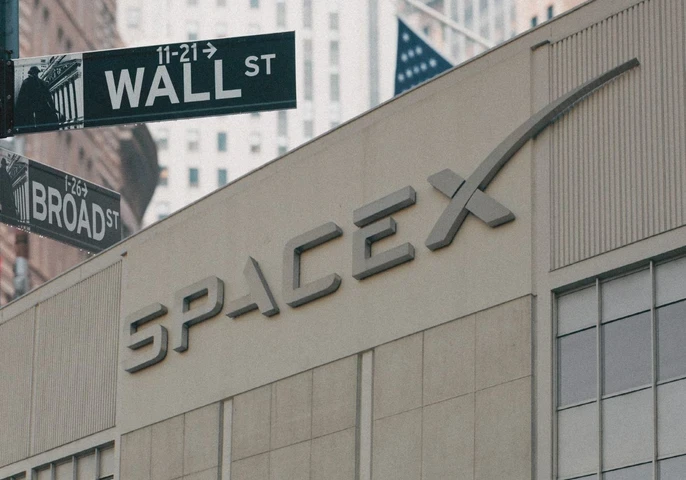
What is clear is that Starlink’s ambitions are moving beyond home internet. If SpaceX proceeds, its next major market may not only be broadband from space, but mobile connectivity sold directly to the people holding the phones.




Comments ( 0 )