
Since February 28, the US and Israeli strikes on Iran have pushed the Middle East into a much more dangerous phase. The immediate consequences have been obvious enough: regional retaliation, market volatility, and renewed pressure on energy infrastructure. But the enterprise technology implications have been just as important, even if they’ve had less headline space.
Governments have already warned organisations to tighten their cyber posture, banks have moved to higher alert, and digital infrastructure has been pulled into the blast radius in a very literal sense.
That matters because this isn’t a brand new category of risk. It’s a pattern the industry has been watching for years. In fact, the World Economic Forum’s Global Cybersecurity Outlook 2026 identifies geopolitical fragmentation alongside artificial intelligence and supply chain complexity as one of the forces reshaping the cyber risk landscape.

Because geopolitical conflict now reaches straight into the systems organisations rely on every day: cloud platforms, third-party vendors, cross-border supply chains, energy networks, and the security teams trying to keep all of that stable while the world becomes less so.
When Global Conflict Hits Digital Infrastructure
The Iran conflict matters to enterprise leaders not because they need a war briefing, but because it shows how quickly geopolitical instability can touch the digital foundations of business. Reuters reported that Amazon Web Services facilities in the United Arab Emirates and Bahrain were damaged in drone strikes linked to Iran’s regional retaliation.
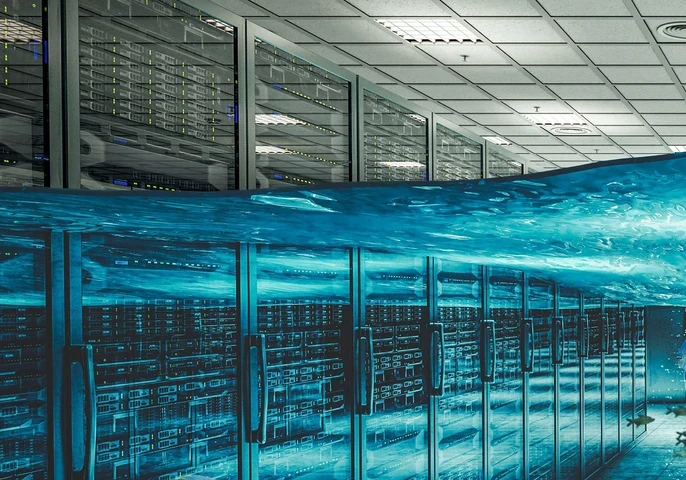
Which caused power disruption, fire-related water damage, and prolonged service issues for customers in the region. That's a sharp reminder that the infrastructure behind cloud computing still depends on physical sites, local power, regional connectivity, and a political environment that can turn hostile overnight.
The knock-on effects don’t stop at the data centre wall. The wider conflict has already disrupted energy infrastructure and shipping routes, with various outlets reporting concern over the Strait of Hormuz, damage across Gulf energy assets, and shutdowns that could take weeks to unwind.
For enterprise technology teams, that creates a more layered problem than “bad news overseas.” Energy instability affects uptime. Trade disruption affects hardware, logistics, and vendor delivery. Political escalation changes the reliability assumptions built into global infrastructure strategies.
This is why digital infrastructure risk can’t be treated as a purely technical issue anymore. The cloud may feel abstract when you’re looking at a dashboard, but the facilities, networks, and energy systems underneath it are tied to geography, regulation, and state power. The moment those systems are stressed by conflict, resilience stops being a nice architecture principle and becomes a hard operational requirement.
Why Cyber Threat Levels Rise During Geopolitical Crises
Cyber risk tends to spike during geopolitical crises for a fairly simple reason. Conflict creates motive, cover, and opportunity at the same time. Threat actors know defenders are distracted, public attention is fragmented, and politically charged events create fertile ground for disruption, influence operations, and opportunistic attacks.
State-aligned threat actors expand operations
The clearest concern is usually state-aligned activity. In early March, the UK’s National Cyber Security Centre advised organisations to review their cyber security posture following the conflict in the Middle East.
Around the same time, a Reuters report on US banks described the financial sector moving to heightened alert over the possibility of Iran-linked cyberattacks, with industry groups stepping up intelligence sharing and resilience planning. Those warnings weren’t based on panic. They followed a well-established pattern in which cyber espionage, disruptive attacks, and strategic signalling all become more likely when geopolitical tensions rise.

Security Becomes Business-Ready
Why boards must treat cybersecurity as an adaptive business capability, balancing AI adoption, identity control and resilience-by-design.
That pattern isn’t limited to the Iran crisis. In January, Poland said it had faced its strongest cyberattack on energy infrastructure in years, with later reporting pointing to Russian actors and destructive intent aimed at renewable energy facilities and a heating plant. When conflict or confrontation deepens between states, cyber operations are often used to probe resilience, send a message, or weaken critical services without crossing every traditional military threshold.
Hacktivism and politically motivated attacks increase
Not every actor in these moments works directly for a state. Some work around the edges of one. Others are simply energised by the politics of the moment. Europol warned on March 5 that the Iran crisis was increasing the risk of cyberattacks against European infrastructure, alongside terrorism, extremism, and conflict-themed fraud.
That matters because hacktivist campaigns tend to thrive in exactly this kind of environment. They don’t need to achieve deep technical sophistication to create disruption. A denial-of-service attack, a leak campaign, or a noisy website defacement can still create reputational damage, pressure operations, and pull security teams away from more serious threats.
The UK has been dealing with a version of this already. In January, the NCSC warned that Russian-aligned hacktivist groups continued targeting UK organisations, especially local government and operators of critical infrastructure, with disruptive attacks designed to take services offline. Different conflict. Same lesson. Politically motivated cyber activity has become a regular feature of geopolitical tension, not an unusual extra.
Critical sectors become priority targets
Some sectors carry more risk than others because they sit closer to national stability. Financial services, energy, telecommunications, logistics, and public infrastructure all become more attractive targets during geopolitical crises because they offer outsized leverage.
Reporting on the Iran war noted that banks were on alert partly because payment systems and Treasury market operations are themselves part of critical infrastructure. Europol’s warning about attacks on European infrastructure points in the same direction. When the goal is pressure, disruption, or symbolism, critical sectors are where attackers can get the most return.
Infrastructure Exposure In A Globally Distributed Technology Stack
Inside Agentic AI Defence Stacks
How CISOs are rebuilding controls, identity, and supply chain security to withstand autonomous attacks and quantum-era decryption threats.

Modern enterprise environments are deeply distributed. Applications may run across multiple regions. Identity layers may depend on one vendor. Data may move between jurisdictions for redundancy, analytics, or customer service. Software supply chains can stretch across several countries before a single update reaches production.
Most of the time, that complexity is framed as a scalability issue. During geopolitical stress, it becomes a resilience issue.
Regional infrastructure disruptions
The AWS disruptions in the Gulf were a visible example because they turned a strategic risk into a service availability problem almost immediately. But the bigger point is broader than one provider. Regional instability can affect power, cooling, connectivity routes, staff access, transportation, and emergency response capacity around digital facilities.
It can also complicate incident recovery, especially when teams assume that nearby failover capacity will remain available under stress. Cloud resilience looks very different when a regional availability problem isn't caused by a software fault, but by conflict.
Supply chain dependencies in global technology ecosystems
The same logic applies to supply chains. Organisations may know their direct vendors, but they often have a weaker view of the geopolitical dependencies beneath them. Sanctions, policy changes, cross-border restrictions, and local instability can all affect technology delivery without looking like a traditional cyber incident at first glance.
In the South China Sea, Reuters reported that sensitive Philippine resupply mission data had leaked to Chinese intelligence, prompting calls for legal reform around espionage and foreign interference. That's obviously a national security case, but it also underlines how data flows, insider risk, and external pressure can intersect inside contested geopolitical environments.
Resilience planning for distributed infrastructure
Inside Modern Preparedness Gaps
Uncover the hidden assumptions in your DR plans, from identity to suppliers, and where unclear decision authority amplifies disruption impact.
This is where architecture choices start to look strategic. Multi-region design, geographic redundancy, tested disaster recovery, and stronger third-party visibility are no longer just good engineering habits. They are part of enterprise disaster recovery in a world where digital dependence and geopolitical instability increasingly overlap. The organisations that cope best with this kind of pressure tend to be the ones that assume disruption will arrive in messy combinations: physical, political, cyber, operational. Because, frankly, it usually does.
Cybersecurity Strategy In An Era Of Geopolitical Risk
The result is that cybersecurity strategy has to stretch beyond technical controls. Security leaders still need patching, detection, segmentation, and incident response. None of that goes away. But they also need a clearer view of geopolitical dependencies across infrastructure, vendors, jurisdictions, and business operations.
Security leadership and enterprise risk management
That’s one reason cyber resilience has become a board-level concern rather than a purely technical one. A geopolitical crisis can affect attack volume, business continuity, supplier reliability, insurance assumptions, regulatory exposure, and customer trust all at once.
The World Economic Forum’s 2026 outlook frames cyber risk as part of a wider operating environment shaped by fragmentation and uneven resilience. Seen that way, security leadership isn't just about defence. it's about helping the business absorb shocks without losing its footing.
Vendor governance and geopolitical alignment
Vendor governance is becoming part of that conversation too. Reuters reported in late February that OpenAI reached a deal to deploy its models on the Pentagon’s classified network, with additional safeguards attached. Days later, Anthropic sued to block what it called an unlawful Pentagon blacklisting tied to disagreements over military use restrictions.
That dispute is unusual in its specifics, but it points to a broader shift. Technology providers are becoming more entangled with defence policy, national security priorities, and political pressure.
Enterprise buyers can’t afford to treat vendors as operating in a vacuum when the wider policy environment may shape product access, governance expectations, and reputational risk.
Preparing for an unpredictable threat environment
Preparation, then, has to be practical. Organisations need stronger cyber threat intelligence, clearer links between security and business continuity teams, and a better process for monitoring geopolitical signals that could affect operations.
Ransomware And Boardroom Control
Boards face legal, financial and reputational stakes as they predefine authority, response plans and ransom policy before an attack.

They need to know which services matter most, which suppliers would hurt most if disrupted, and which regional dependencies look safe only because nobody has had to pressure-test them yet. That kind of work isn't dramatic. It’s also exactly what keeps dramatic events from becoming internal crises.
Final Thoughts: Cybersecurity Now Moves At The Speed Of Global Events
The Iran conflict didn’t create the link between geopolitics and cyber risk. It exposed it again, in a way that was hard to miss. When physical strikes can disrupt cloud infrastructure, when national cyber agencies issue rapid warnings, and when critical sectors move to higher alert within days, the old idea that geopolitical instability sits somewhere outside enterprise technology starts to look badly outdated.
That's the real takeaway here. Modern conflict now extends into the digital systems organisations rely on every day. It affects infrastructure, supply chains, vendor relationships, and the threat environment security teams are expected to manage. The businesses that respond best will be the ones that treat cybersecurity as part of strategic risk management rather than a technical clean-up function that gets called in after the fact.
EM360Tech will keep following the conversations that matter here, especially where cybersecurity, infrastructure resilience, and geopolitical pressure start colliding in the real world. For leaders trying to make sense of what changes next, that context is becoming just as valuable as the headline itself.



Comments ( 0 )