











Anthropic CEO Calls For Industry To Slow Model Development Amid Misuse
Both Sam Altman, CEO of OpenAI, and Elon Musk, who runs xAI, responded on X to say they agree with the proposal.

“A simple question posed to an AI agent is quickly becoming a distributed computing problem."


Dr. Joe Perez is a powerhouse in the IT and education worlds, with 40-plus years’ experience and a wealth of credentials to his name. From Business Intelligence Specialist at NC State University to Senior Systems Specialist/Team Leader at the NC Department of Health & Human Services (and Chief Technology Officer at CogniMind), Perez is at the forefront of innovation and process improvement. With more than 22,000 LinkedIn followers and a worldwide reputation as keynote speaker, data management/analytics expert, and prolific, bestselling author, Perez is a highly sought-after resource in his field. He speaks at many conferences each year, reaching audiences in over 20 countries across the globe and has been highly-ranked by prestigious Thought Leader communities. He was recently inducted into both the IIBA Hall of Fame and the United Nations Global Network of Data Officers and Statisticians and was selected to be a Distinguished Fellow in the Public Sector Network's Future Government Institute. When Dr. Joe is not working, he shares his musical talents and gives back to his community through his involvement in his church's Spanish and military ministries.
Discover expert led podcasts, articles, and news from enterprise technology leaders at EM360Tech, your source for B2B tech intelligence
Both Sam Altman, CEO of OpenAI, and Elon Musk, who runs xAI, responded on X to say they agree with the proposal.


AI security isn’t about endless controls. Richard Stiennon speaks with Omar Khawaja and Danny Healy about understanding AI risks, strengthening governance and building trust as organisations scale.

We look at why more telemetry isn't giving enterprises the visibility they need to govern increasingly complex and autonomous systems.

AI corporation Anthropic says Russian and Chinese actors used Claude in increasingly sophisticated campaigns, highlighting how AI is becoming a tool for cyberattacks and model extraction.

A ransomware attack won't wait for business hours. Here's what C-level leaders need to decide and know in the first 24 hours to protect the business.

We look at why faster GPUs increasingly depend on the networking infrastructure connecting them to deliver usable AI capacity.
We report on OpenAI’s call for mandatory US AI safety rules as the company responds to rapidly advancing capabilities and rogue agent incidents.

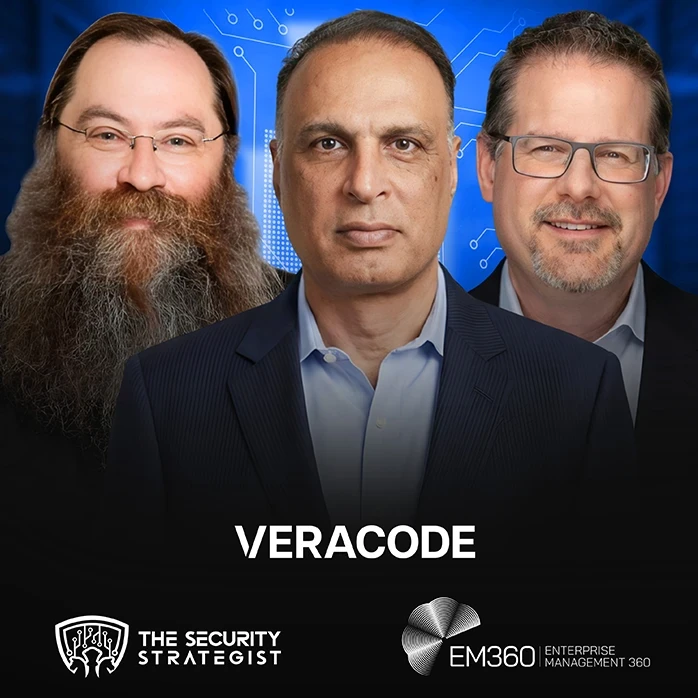
Chris Steffen is joined by Chris Wysopal and Sohail Iqbal from Veracode to explore how AI-generated code and open-source software are rapidly expanding the cybersecurity attack surface.

An Architectural Imperative for Hardware Security Modules in the Post-Quantum Era
The most important digital skill may no longer be knowing how to use technology, but knowing when its answers need to be questioned.

We look at when AI infrastructure accumulates enough authority to require the stronger security controls used for privileged systems.

Harrison Kim described Samsung as one of the largest-scale deployments of ChatGPT anywhere in the world, with employees in Korea and overseas using it for research and development, marketing and sales.

In this guide, we'll break down what Google Analytics actually tracks, how the platform has changed, and why getting it right matters.
We look at why AI-powered SQL is forcing data teams to balance query cost, latency and answer quality in new ways.

Could AI change the way organisations buy and build business software?

China's tech giants have launched new foldable smartphones, intensifying competition in the premium handset market just days before Apple is expected to unveil its very first foldable iPhone.
We look at why AI productivity may increasingly depend on how much machine work people can direct, verify and keep under control.

We cover the bizarre $320M Liquid Network hack, from the apparent Elements vulnerability and patch timeline to the attackers promising to return most of the Bitcoin.
"The next era will be defined as much by the identity and authorisation plumbing around the models as by the models themselves: which agents exist, who they act for, what they are allowed to do, and how that can be proven after the fact."
We explore why modern infrastructure is becoming harder to audit, and what organisations need to preserve accountability as systems change.

We explore why scalable quantum networking may depend on integrating quantum capabilities with the telecom infrastructure already in place.
We look at why frontier AI control is moving beyond developers as governments, independent evaluators and neutral institutions take a bigger role.
Get the latest insights, analysis and tech news delivered straight to your inbox
Filters