
The “SaaSpocalypse" sparked debate about whether AI will eventually reduce the need for traditional SaaS applications. This episode looks at what that shift could actually mean for businesses.
In the second episode of this two-part conversation, Poornima Ramaswamy, Co-founder of PivotX, joins Kevin Petrie, Vice President of Research at BARC, to explore a real-world case study involving a mid-sized business process outsourcing firm.
The organisation was struggling with fragmented systems, manual Excel-based planning and an operating model that was constantly changing. Instead of simply adding another SaaS application, PivotX helped rethink the business process itself and build a flexible planning solution with data and AI at its core.
When SaaS Doesn't Fit the Messy Middle
For many mid-sized organisations, enterprise software does not exist in a clean environment.
Businesses may have grown through acquisitions, inherited multiple systems and developed processes that no longer fit neatly into standard software templates. Meanwhile, their operating models continue to change.
That was the challenge facing the organisation in this case study.
Corporate planning, financial planning, budgeting and forecasting were heavily dependent on manual Excel-based processes. Existing SaaS planning applications could address parts of the problem, but they often assumed that organisations already had clean data, stable operating models and standardised planning processes.
The reality was very different.
Building a Business Data Product With AI
Rather than forcing the organisation into a predefined software model, PivotX took a different approach.
The team built what Poornima describes as a business data product with AI at its core.
The team first examined how the organisation actually worked, identified its operational challenges and then considered where data, machine learning, business intelligence and AI could add value.
The resulting solution brought together flexible planning workflows, data management, machine learning, BI and AI.
The goal was not to use AI everywhere. Instead, AI was applied where it could improve the process, while machine learning handled predictive modelling and BI supported analytical workflows.
AI Is a Change Management Project
One of the strongest arguments in the conversation is that AI adoption should not be treated as a technology project.
Poornima describes AI engagements as fundamentally change management engagements because successful implementation changes the way people work.
That means involving business stakeholders from the beginning rather than presenting them with a finished technology solution.
The approach also involves identifying broken or inefficient processes before automating them. Organisations should not simply use AI to accelerate a bad process.
Instead, teams need to understand the current workflow, identify where it needs to change and design the solution alongside the people who will ultimately use it.
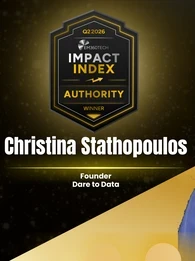
Inside Data-First AI Leadership
Stathopoulos links data architecture, AI readiness and workforce skills into one operating model for enterprise decision making.
Putting Business Users in Control
The case study also challenges the traditional relationship between business teams and IT.
Rather than creating another application that requires extensive IT administration, PivotX designed the planning solution to be more directly managed by the business.
That means the application can adapt as the organisation's operating model changes, while IT provides lighter-touch support around infrastructure and technology.
For Poornima, this is not about replacing IT. It is about relieving IT teams of some of the functional administration they are often expected to handle without having the necessary business context or resources.
Could AI Change the SaaS Model?
This brings the conversation back to the SaaSpocalypse.
Poornima is cautious about predicting whether SaaS is actually heading for extinction. But she does see a major opportunity for organisations to build more adaptable solutions around their own business processes.
AI can reduce the time and effort required to build software, while data and machine learning can be embedded directly into operational workflows.
For mid-sized organisations in particular, this could open up new possibilities.
Instead of buying a large portfolio of products to solve individual problems, businesses may be able to build targeted applications around their own processes and data.
Inside AI’s Hidden Plumbing
AI fails without resilient data pipelines, governance and infrastructure; this piece reframes AI as a business utility, not an IT project.
Data Fundamentals Still Matter
Despite the focus on AI, the conversation comes back to the same foundation as the first episode: data management.
Poornima argues that organisations don't necessarily need the latest data platform or a massive technology investment to become AI-ready.
They need the fundamentals.
That means data quality, governance, cataloguing and mastering.
The real opportunity is to connect those foundations directly to business outcomes rather than treating data management as an isolated technical discipline.
The Bigger Opportunity for Mid-Sized Businesses
Poornima's broader message is that organisations of almost any size can use data and AI to adapt to changing markets.
The key is to make data and AI part of the business operating model rather than treating them as technology projects.
For mid-sized organisations that may not have the budgets or technical resources of the largest enterprises, that could be particularly significant.
AI doesn't necessarily mean buying more software.
Sometimes, it could mean building something that fits the business better.

When Bad Data Powers Smart AI
Explore how biased, misgoverned datasets silently undermine AI decisions in hiring, health and finance, and what governance must add.
Takeaways
- AI adoption should be treated as a change management initiative, not simply a technology project.
- Standard SaaS applications may struggle when organisations have complex or constantly changing operating models.
- Mid-sized businesses often face fragmented systems, inconsistent data and heavy reliance on Excel.
- Organisations should fix broken business processes before applying AI to them.
- AI, machine learning and BI can work together rather than being treated as competing technologies.
- Business stakeholders should help shape AI solutions from the beginning.
- Applications can be designed to be managed by business teams, reducing the administrative burden on IT.
- AI could give organisations more flexibility to build software around their own business processes.
- The SaaSpocalypse may be overstated, but AI is changing the economics and possibilities of enterprise software.
- Strong data quality, governance, cataloguing and mastering remain essential regardless of the technology approach.
- Mid-sized organisations can use data and AI to become more efficient without necessarily investing in a huge portfolio of enterprise products.
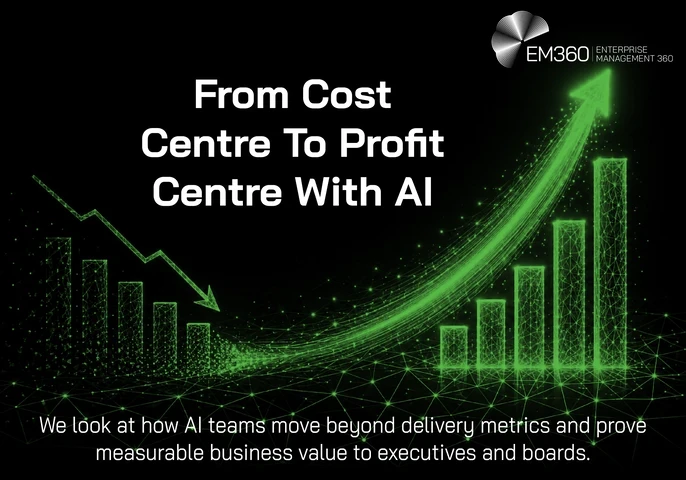
When AI Becomes A Profit Engine
Shift AI from pilots and activity metrics to portfolios that evidence margin, growth, risk reduction and operational resilience.
Chapters
- 00:00 Introduction to the Second Case Study
- 02:27 The Challenge Facing a Mid-Sized Organisation
- 04:00 Why Traditional SaaS Wasn't Enough
- 06:12 Building a Business Data Product With AI
- 08:00 Connecting Data, AI, ML and BI
- 10:00 Why AI Is Really Change Management
- 12:00 Putting Business Users in Control
- 14:00 What the SaaSpocalypse Means for Businesses
- 15:50 Lessons for AI Adopters
- 17:00 The Data Foundations That Still Matter



Comments ( 0 )