
President Donald Trump will touch down in Beijing on Wednesday, which will be at the start of the first visit by a U.S. president to China in nearly a decade. Trump declared that he would press Chinese leader Xi Jinping to "open up" to American business and confirmed at the last minute that Nvidia chief executive Jensen Huang would be joining him.
Trump announced his Truth Social platform while en route, after a refuelling halt in Alaska, where Huang was spotted boarding Air Force One. "I will be asking President Xi, a Leader of extraordinary distinction, to 'open up' China so that these brilliant people can work their magic," Trump wrote, referring to the delegation of CEOs travelling with him. "I will make that my very first request."

Huang was a late addition, not on the initial White House list of travelling executives released earlier this week. Apple chief executive Tim Cook and Tesla chief Elon Musk are also among the more than a dozen senior business figures joining Trump on the trip, according to reports.
The AI Chip War
Huang’s inclusion in the delegation highlights how central artificial intelligence has become to the broader geopolitical rivalry between Washington and Beijing. Nvidia has spent months navigating an increasingly complex regulatory environment as it seeks approval to sell its advanced H200 AI chips in China, one of the world’s largest and most strategically important AI markets. Although Washington approved the sale of modified H200 variants designed to comply with U.S. export rules in early 2026, Chinese firms continued to face potential restrictions and political scrutiny over purchases of the chips. By March and April, reports indicated that both governments were still negotiating approvals for specific Chinese customers, underscoring how closely semiconductor access has become tied to high-level diplomacy. Huang’s late addition to the delegation suggests AI chips and export controls are likely to feature prominently in summit discussions.
The broader backdrop is an escalating race between the United States and China for dominance in artificial intelligence, a competition many policymakers now describe as the defining technological rivalry between the two countries. Washington has tightened export controls on advanced semiconductors to restrict Beijing’s access to cutting-edge computing power, while China has accelerated efforts to build a self-sufficient domestic AI ecosystem. For Nvidia and other major U.S. technology firms, the restrictions have created both geopolitical uncertainty and billions of dollars in lost commercial opportunity.


When AI Theft Meets Geopolitics
Anthropic’s claims against Alibaba show how model scraping is reshaping export controls, sanctions policy and AI vendor due diligence.
DeepSeek, Silicon Valley and the New AI Arms Race
The pressure intensified in early 2025 when Chinese AI startup DeepSeek unveiled its R1 reasoning model. Developed at a fraction of the cost associated with leading American systems and released as open-source software, the model challenged assumptions in Silicon Valley that export controls alone would be enough to slow China’s progress in artificial intelligence. Investors reacted sharply, wiping nearly 17 per cent from Nvidia’s market value in a single trading session amid fears that more efficient AI models could reduce demand for the company’s most expensive hardware.
The DeepSeek breakthrough triggered a rapid response across both Washington and Silicon Valley. U.S. AI companies, including OpenAI, Google DeepMind and Anthropic, accelerated research into more efficient model development, while lawmakers pushed for even stricter controls on semiconductor exports. At the same time, the episode exposed a growing dilemma for Nvidia. Its most powerful processors remain heavily restricted in China, even as Chinese developers continue finding ways to achieve competitive AI performance with fewer resources and alternative hardware strategies.
China, meanwhile, has made AI self-sufficiency a formal national priority. The country’s latest Five-Year Plan identifies artificial intelligence and advanced semiconductor development as strategic imperatives, with state-backed firms investing billions into domestic chip manufacturing and design. Despite those efforts, Chinese technology companies continue to pursue access to high-end U.S.-designed processors wherever regulations allow, underlining how dependent the global AI industry remains on American semiconductor technology.
Inside GigaChat’s China Chip Bet
Russia’s flagship LLM pivots to Chinese silicon, revealing how AI ambitions now hinge on constrained compute and alternative supply chains.
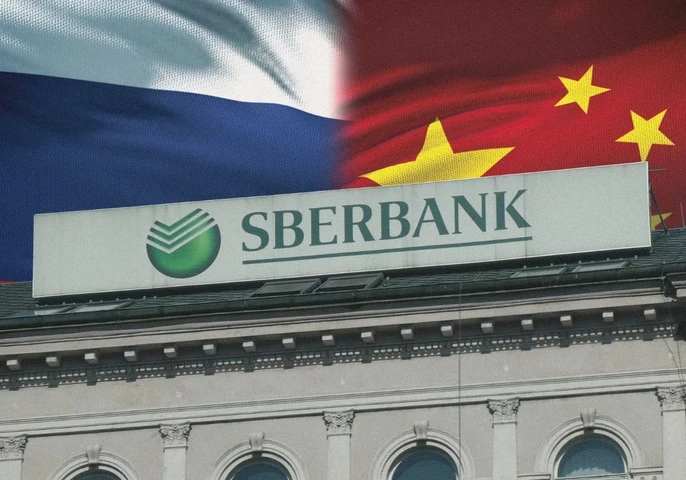
Against that backdrop, the Beijing summit represents a significant opportunity for Nvidia. China previously accounted for roughly a quarter of the company’s data centre revenue before export controls tightened, making access to the market commercially critical. Trump’s decision to bring Huang into the delegation underscores how deeply the fortunes of U.S. technology companies are now tied to diplomatic negotiations between the world’s two largest economies, with AI chips emerging as one of the most strategically contested assets in global trade.
Trade, Taiwan and the Shadow of Iran
The summit agenda stretches well beyond technology. Trump arrives eager to consolidate the fragile trade deal struck with Beijing last year. A deal his top trade negotiator, Scott Bessent, was working to shore up on the sidelines of separate talks with Chinese officials in South Korea on Wednesday. The president is under pressure to deliver economic wins at home, where his approval ratings have been dented by the ongoing conflict with Iran.
Sensitive geopolitical topics are also on the table. Arms sales to Taiwan, the democratically governed island that China claims as its own territory, are expected to feature in the talks, as will the war in Iran. Trump is widely anticipated to urge Xi to use China's influence to push Tehran toward a negotiated settlement with the US, though he has publicly said he does not believe he will need Beijing's help to secure a deal.
Trump is scheduled to arrive in Beijing late on Wednesday ahead of a programme that includes formal meetings with Xi, a state banquet, and a guided tour of the Temple of Heaven, which is a UNESCO World Heritage site in a choreographed display of diplomatic pageantry.



Comments ( 0 )