
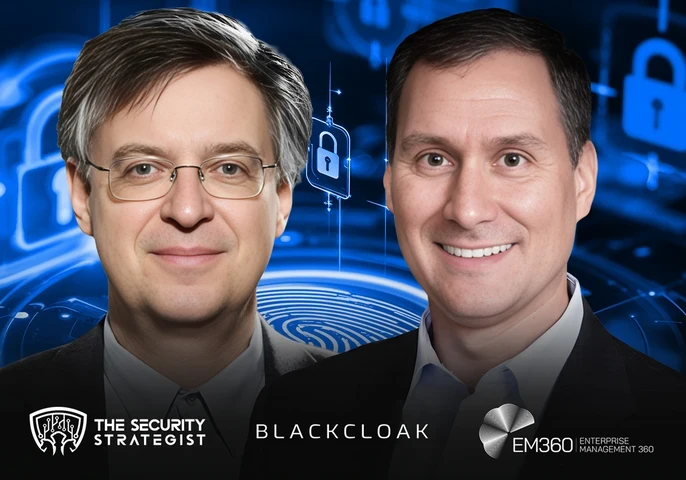
Cybersecurity has traditionally focused on strengthening corporate networks, cloud systems, and devices. However, in the recent episode of The Security Strategist podcast, Dr. Chris Pierson, Founder and CEO of BlackCloak, and host Richard Stiennon, Chief Research Analyst at IT-Harvest, argue that the most significant vulnerabilities are now outside the office perimeter.
As AI-driven attacks increase and cybercrime combines digital, physical, and reputational risks, executives and their close contacts have become prime targets. Protecting the business now involves protecting executives in their personal lives.
Broad Attack Surface: Private & Corporate Properties
Pierson points out that cybercriminals follow basic economic principles. Attacking a company that spends millions on security is costly and time-consuming. Instead, targeting an executive’s personal life—home networks, private emails, family devices—is cheaper, quicker, and often much more effective.
Executives work in various environments–primary homes, vacation properties, private jets, yachts, and remote offices equipped with smart home technology. Each of these locations broadens an attack surface that traditional corporate security programs rarely address. Home automation systems, private Wi-Fi networks, and personal email accounts have become part of the corporate risk landscape, regardless of whether organisations recognise this.
Pierson notes that taking over personal email accounts continues to be the number one attack method, especially for board members who often revert to personal accounts instead of using corporate options. Once attackers gain access, they can steal intellectual property, intercept financial transactions, or link back into the corporate network. The executive home, he states, is no longer just near the perimeter—it is the perimeter.
AI, Deepfakes, and the Rise of Targeted Impersonation
The discussion becomes even more pressing when addressing AI-enabled threats. Deepfakes, once a possibility, are now practical tools for fraud and extortion. Pierson spotlights a critical incident in early 2024, when a deepfake impersonation of a CFO allowed attackers to move tens of millions of dollars in one event.
AI has removed much of the background work attackers used to do. Public executive biographies, earnings calls, videos, and high-resolution images provide everything needed to imitate a voice or face. What used to take days to research can now happen in mere seconds. This leads to a rise in hyper-realistic business email scams, payment diversion schemes, and reputational attacks that make it hard to distinguish between truth and lies.
Beyond financial losses, the reputational and personal fallout can be significant. Family members can become collateral damage, private moments can turn into leverage, and the risks to physical safety rise when travel plans and locations become known. As Pierson stresses, digital and physical executive protection are now interconnected.
The podcast message relays–high-level threats require specialized defenses. BlackCloak’s strategy, which Pierson refers to as “Digital Executive Protection,” safeguards a small but vital group: board members, the C-suite, executive leaders, and key personnel like patent holders, system administrators, executive assistants, and chiefs of staff. These individuals hold essential information, and attackers are aware of this.
For security leaders, the question is no longer whether this risk exists, but how quickly they can act to mitigate it. In an age of AI-driven cybercrime, reducing the executive attack surface may be the most crucial security investment an organisation can make.
When Leaders Become Perimeters
Attackers now bypass corporate defenses by abusing executive home networks and devices. Rethink where your security perimeter really sits.
Takeaways
- Digital Executive Protection is essential for modern security strategies.
- AI is changing the landscape of cyber threats significantly.
- Home networks are increasingly becoming targets for cybercriminals.
- Reputational risks can affect not just individuals but their families, too.
- Deepfakes pose a new level of threat to corporate executives.
- Organisations must consider the personal lives of executives in their security plans.
- The attack surface for executives is expanding beyond the corporate environment.
- Cybersecurity must evolve to address the vulnerabilities of home networks.
- Protecting key personnel is crucial for maintaining corporate integrity.
- BlackCloak specialises in providing Digital Executive Protection services with concierge support.
Chapters
00:00 Introduction to Digital Executive Protection
02:53 The Evolving Threat Landscape
06:04 AI's Role in Cybersecurity Threats
09:05 Home Networks as New Battlegrounds
11:54 Reputational and Financial Risks
14:56 Extending Protection Beyond Executives
17:01 Final Thoughts and Recommendations
#DigitalExecutiveProtection #Cybersecurity #ExecutiveProtection #AICyberAttacks #Deepfakes #CyberRisk #HomeSecurity #CISOs #CorporateSecurity #TechPodcast #Cybercrime #BlackCloak
Follow: @EM360Tech on YouTube, LinkedIn and X
BlackCloak YT: @blackcloakcyber2494
LinkedIn: @BLACKCLOAK
BlackCloak X: @BlackCloakCyber

BlackCloak secures the personal digital lives of corporate executives, board members, high-net-worth individuals, and their families. We tailor our specialist technology, expertise and support to deliver bespoke solutions that protect the privacy, devices, and homes of our clients from cyber threats.
Used by Fortune 500 companies, recommended by wealth management firms, and trusted by private family offices, the BlackCloak Platform is an award-winning cybersecurity solution enhanced by personalized expertise for holistic support 24/7.
With BlackCloak, high-profile individuals get peace of mind knowing their family, privacy, reputation, and finances are secured, while CISOs and CSOs can be confident that their people and organization remain protected without invading their executives’ personal lives. Learn more at www.blackcloak.io.
Comments ( 0 )