
Podcast Series: The Security Strategist
Host: Richard Stiennon, Chief Research Analyst at IT-Harvest
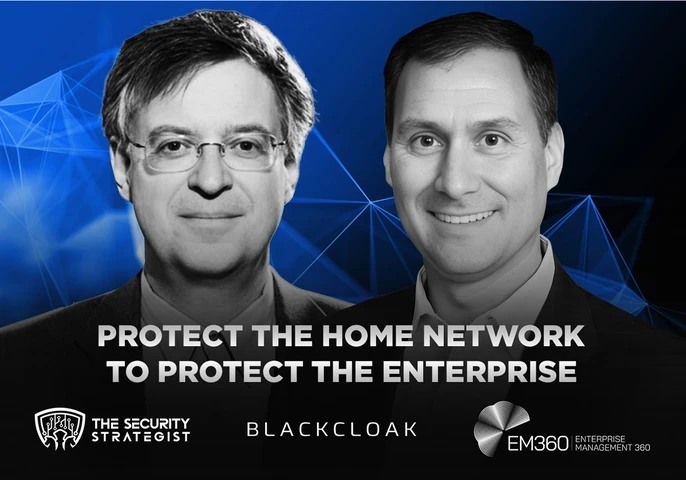
Guest: Dr Chris Pierson, Founder and CEO of BlackCloak
There has always been a boundary in the enterprise technology corporate network. However, that boundary has been fading for a while, and now it may have completely vanished.
In the recent conversation on The Security Strategist podcast, cybersecurity expert Dr Chris Pierson, also the Founder and CEO of BlackCloak, joined host Richard Stiennon, Chief Research Analyst at IT-Harvest.
The BlackCloak CEO presented a reality that many CISOs are only now facing. The most critical vulnerabilities in an enterprise may lie far beyond corporate control, embedded in the personal lives of its leadership.
Why Attackers are After Soft Targets?
Pierson explains that attackers are no longer focused on directly breaching secure enterprise systems. Instead, they are targeting individuals with the highest levels of access in a more effective way.
Executives and board members have always been appealing targets, but the strategies have changed. Personal email accounts, home Wi-Fi networks, and even family members are now part of the attack surface. These environments generally lack the layered defences of corporate infrastructure, making them easier to exploit.
The stakes are high. A compromised home network or personal device can quickly provide access to enterprise systems. Even simple attacks, such as text messages pretending to be from a CEO, can work when aimed at those outside formal security measures.
What makes this trend especially dangerous is its subtlety. These attacks rarely look like the major breaches that make the news. Instead, they happen quietly, taking advantage of everyday behaviours in settings that were never meant to withstand sophisticated threats.
Also Watch: How Do Attackers Exploit Executives’ Personal Lives to Breach Companies?
Why Privacy Measures Aren’t Enough
In response, many enterprises have implemented privacy-focused solutions to reduce the digital footprint of executives by removing personal data from broker sites. This is a logical first step, but as Pierson points out, it only offers partial protection.
Today, personal data isn’t limited to a single source. It is constantly collected, sold, leaked, and reshuffled across many channels. Even when successfully removed from one platform, it often reappears elsewhere—sometimes accidentally, through everyday activities like online shopping or registration for accounts.
More importantly, cutting down visibility does little to tackle active threats. An attacker doesn’t need complete information to succeed; they just need enough.
This creates a misleading sense of progress for security leaders. Privacy efforts may reduce the attack surface, but they don’t eliminate the underlying risks. Without additional layers of protection, executives remain vulnerable in environments where attackers increasingly target them.
When Home Becomes The Perimeter
Why CISOs must extend defenses to executives’ homes, devices and families as attackers bypass hardened corporate networks.
What is the New Layer of Enterprise Security?
What is developing is not merely an extension of existing cybersecurity practices but a new discipline. It’s an approach that treats executives as a critical, high-risk perimeter on their own.
The CEO of BlackCloak describes this as a more comprehensive protection model that covers all aspects of an executive’s digital life. It goes beyond corporate endpoints to include personal devices, home networks, and the wider ecosystem where executives and their families live.
Enterprise security can no longer focus solely on corporate assets. The home network, personal devices, and even the family environment are now part of the overall risk landscape. At the same time, the line between cyber and physical threats continues to blur, increasing the stakes further.
For IT leaders in enterprise technology, the question is no longer whether these risks exist but how they are being managed. As attackers continue to adapt, the path into the enterprise is not through the front door but through the people who have the keys and everything that surrounds them.

Inside Cyber-Secure Travel
Map the attack paths across devices, cards, and networks to harden your travel stack before departure, in transit, and on return.
Key Takeaways
- Executives are the new cybersecurity perimeter and top attack targets.
- Personal devices and home networks increase enterprise cyber risk.
- Data broker removal alone cannot protect executive privacy.
- Digital executive protection requires multi-layered security solutions.
- Cybersecurity strategies must address physical and cyber threat convergence.
For more information, please visit em360tech.com and blackcloak.io.
EM360Tech YouTube: @enterprisemanagement360
EM360Tech LinkedIn: @EM360Tech
EM360Tech X: @EM360Tech
Follow: @EM360Tech on YouTube, LinkedIn and X
BlackCloak YT: @blackcloakcyber
LinkedIn: @BLACKCLOAK
BlackCloak X: @BlackCloakCyber
#ExecutiveCybersecurity #DigitalExecutiveProtection #CyberRisk #BlackCloak #CISO #HomeNetworkSecurity #CorporateBreaches #CyberStrategy #HomeNetwork #AttackSurface #TheSecurityStrategist #DrChrisPierson #RichardStiennon #EM360Tech #HomeWiFiBreach

BlackCloak secures the personal digital lives of corporate executives, board members, high-net-worth individuals, and their families. We tailor our specialist technology, expertise and support to deliver bespoke solutions that protect the privacy, devices, and homes of our clients from cyber threats.
Used by Fortune 500 companies, recommended by wealth management firms, and trusted by private family offices, the BlackCloak Platform is an award-winning cybersecurity solution enhanced by personalized expertise for holistic support 24/7.
With BlackCloak, high-profile individuals get peace of mind knowing their family, privacy, reputation, and finances are secured, while CISOs and CSOs can be confident that their people and organization remain protected without invading their executives’ personal lives. Learn more at www.blackcloak.io.



Comments ( 0 )