
Large language models sit behind the chatbots, coding agents and search tools that millions of people use every day. We explain what LLMs are, how they work, the leading examples in 2026 and what enterprises need to weigh before putting one to work.
More than 1.2 billion people use ChatGPT every week, according to OpenAI. Inside organisations, the picture is just as stark. McKinsey's 2026 State of AI survey found nearly nine in ten respondents report regular AI use in at least one business function.
Large language models (LLMs) are the engine underneath most of it. They power chatbots like ChatGPT, they've entered Google search through Google's AI Overviews, and they're built into tools for customer service, content creation, programming and a lot more.

LLMs are no longer a novelty. They're a standard part of modern software. That makes the basics worth getting right.
In this article, we'll explain what an LLM is, how it works and how it's trained, then walk through the leading examples, their real-world use cases, their limitations and how enterprises should choose between them.
What is a Large Language Model (LLM)? Definition
A large language model is an AI model that predicts and generates language. At its simplest, a language model estimates how likely a token, or sequence of tokens, is to appear within a longer sequence. A token might be a whole word, part of a word or a single character.
LLMs take that idea and scale it up. Google explains that they make far better predictions than older language models because they contain far more parameters and take in far more context. Parameters are the internal values a model adjusts during training. Modern LLMs have hundreds of billions, or even trillions, of them.
So "large" refers to both the size of the model and the scale of the data it learns from.
You'll often see LLMs described as foundation models. The term comes from Stanford researchers, who used it for models trained on broad data at scale and adaptable to a wide range of downstream tasks. Every LLM in this article is a foundation model. Not every foundation model is an LLM, since some are built mainly for images, audio or other data.
That broad training is what makes LLMs so versatile. The same model can answer questions, summarise a report, translate text, write code and hold a conversation.
It also brings challenges, including biased outputs, misinformation and confident mistakes. And bigger isn't automatically better. A common misconception is that the more data a model is trained on, the faster and more accurate it becomes. Speed has little to do with training data: a model's size and the hardware running it largely determine how quickly it responds.
Accuracy is more nuanced too. DeepMind's influential Chinchilla research found that many large models were significantly undertrained, and that model size and training data should grow together. Its 70-billion-parameter model, trained on four times more data, outperformed models with up to 530 billion parameters. Because it was smaller, it was also cheaper to run.
The quality and balance of data matter as much as the quantity.

How Do LLMs Work?
When you type a prompt, an LLM breaks it into tokens. Google notes that in English, one token is roughly four characters, or around three-quarters of a word.
The model then calculates the probability of different tokens coming next and picks one. It adds that token to the sequence and repeats the process, token by token, until the response is complete. Simply put, an LLM is an extremely sophisticated autocomplete.

When AI Theft Meets Geopolitics
Anthropic’s claims against Alibaba show how model scraping is reshaping export controls, sanctions policy and AI vendor due diligence.
That's also why LLMs can produce unexpected or biased responses. They generate what is statistically likely based on their training, which isn't always what is true.
Most LLMs are built on the transformer architecture, first introduced in Google's 2017 paper "Attention Is All You Need". Its key innovation is self-attention.
For every token in the input, self-attention effectively asks how much each of the other tokens affects its meaning. Google's example is the word "it" in "The animal didn't cross the street because it was too tired". Self-attention helps the model work out that "it" refers to the animal, not the street. Swap "tired" for "wide" and the answer should flip.
Because self-attention looks at all the tokens at once rather than in strict order, transformers also need positional information so they know where each token sits in the sequence.
Most chat models today use a decoder-only version of the transformer, which, as Google puts it, generates new tokens from the text already generated. Stack many self-attention layers on top of each other and the model can pick up progressively more complex patterns, from basic grammar to tone and context across a whole document.
How Are LLMs Trained?
There's an important difference between training a model and using it.
Training is when the model learns. Inference is when a trained model generates responses for users. Training happens once (or in occasional large updates) and is enormously expensive. Inference happens every time someone sends a prompt.
Modern LLMs are typically trained in two broad stages.
Pre-Training
First, the model learns language patterns from huge amounts of text. OpenAI describes pre-training as predicting the next word across vast amounts of text, without any labels saying which statements are true or false. Some model types instead learn by filling in deliberately hidden words.
Inside GigaChat’s China Chip Bet
Russia’s flagship LLM pivots to Chinese silicon, revealing how AI ambitions now hinge on constrained compute and alternative supply chains.

Each time the model gets a prediction wrong, a technique called backpropagation adjusts its parameters slightly. Repeat that billions of times and the model builds a detailed internal map of how language works. The scale has grown fast: Meta trained its Llama 4 models on more than 30 trillion tokens of text, images and video.
Post-Training
A pre-trained model is good at continuing text. It isn't necessarily good at following instructions or being helpful.
Post-training fixes that. OpenAI's research on InstructGPT showed that making a model bigger does not inherently make it better at following a user's intent. By fine-tuning with human demonstrations and then reinforcement learning from human feedback (RLHF), OpenAI found people preferred outputs from a 1.3-billion-parameter model over the 175-billion-parameter GPT-3.
Today's recipes go further. Meta, for example, used light supervised fine-tuning, then online reinforcement learning, then a final preference-tuning step for Llama 4. DeepSeek's latest models combine supervised fine-tuning and reinforcement learning to train domain-specific experts, then merge them into a single model.
Post-training is also how many models learn to "reason". These models work through a problem step by step before answering, and developers can often choose how much reasoning effort a model spends, trading speed for depth.
Even after all this, LLMs rely on statistical patterns. Whether that amounts to genuine understanding is still debated among researchers.

What Are Multimodal LLMs?
Multimodal LLMs can process more than one type of data, such as text, images, audio and video.
Early LLMs worked only with text. Now multimodality is close to standard. Meta built Llama 4 to be natively multimodal, training it on text, images and video together from the start rather than bolting vision on afterwards.
This makes LLMs useful for a much wider set of tasks: reading a chart, describing a photo, pulling figures out of a scanned document or answering questions about a video.

Managing GPT-5.6 Safety Risks
What stricter safeguards, red teaming and policy delays reveal about governing advanced models in security and high-risk domains.
One detail is worth knowing. Many "multimodal" models accept several input types but still only produce text. Anthropic's current Claude models, for example, all accept text and image input and produce text output. Generating images, audio or video usually involves separate specialist models or tools working alongside the LLM.
Use Cases for LLMs
LLMs have moved well beyond chat. McKinsey found respondents most often report scaling AI agents within IT, knowledge management and software engineering. Here are the use cases that matter most to enterprises in 2026.
1. Customer Support and Virtual Assistants
Customer service was one of the first places LLMs landed, and it's still one of the biggest. McKinsey reports that chatbots are the most widely scaled AI tool, with 47 per cent of respondents saying their organisations are scaling them across the enterprise. Service operations is also one of the functions where respondents most often report cost reductions from AI.
Modern assistants do more than answer FAQs. They can look up order details, summarise a customer's history for a human agent and route complex cases to the right team.
2. Content Creation and Writing Assistance
LLMs help draft articles, emails, product descriptions, reports and social posts. They're most useful for first drafts, rewriting for different audiences and editing for clarity and tone.
McKinsey found respondents most often attribute revenue gains from AI to marketing and sales. Human review still matters, especially for anything factual or customer-facing.
3. Language Translation
Translating text from one language to another is one of the core tasks Google lists for language models. Because LLMs consider the context of a whole passage, they handle idioms and tone better than older word-by-word systems.
Quality still varies by language. Models trained on less data in a given language tend to perform worse in it, so test with your own content before relying on output.
4. Healthcare Applications
Healthcare is seeing growing use, from summarising clinical notes and research papers to answering patient questions. Meta says it worked with a team of physicians to develop its Muse Spark model's responses to common health questions.
When AI Giants Hit Public
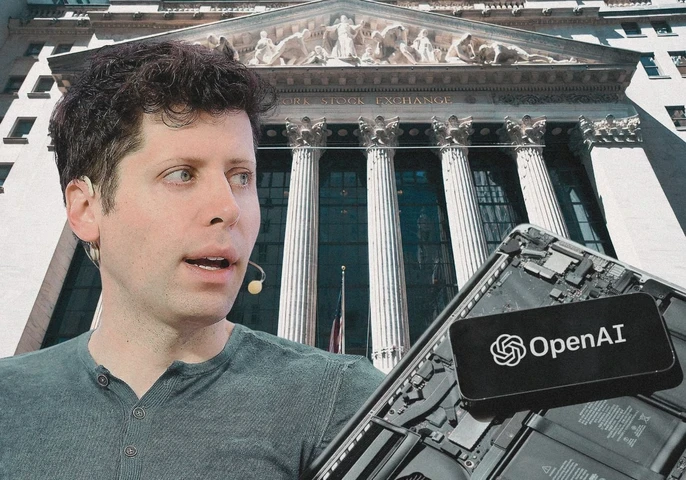
OpenAI, Anthropic and SpaceX line up trillion-scale IPOs, forcing boards to rethink AI exposure, deal timing and concentration risk.
This is also an area where the stakes are highest. Any clinical use needs validation for the specific task, and a qualified human should stay responsible for decisions.
5. Legal Document Analysis
LLMs can review contracts, extract key clauses, summarise case law and draft documents. Legal AI firm Harvey told OpenAI that GPT-6 Astra surfaces unsupported assumptions and turns gaps into drafting positions, approaching legal work much like a careful lawyer would. As with any vendor-published testimonial, treat it as a signal to test, not proof.
6. Software Development
Coding has become one of the most significant enterprise uses of LLMs. About two in ten McKinsey respondents say their organisations are scaling software coding agents, and 32 per cent report deciding against buying at least one software product because they could build it in-house with agentic coding tools.
The work has moved from autocompleting lines of code to completing whole projects. Anthropic reports that, during early testing, Stripe used its Claude Fable 5 model to complete a codebase-wide migration in a day that would otherwise have taken a team more than two months.
7. Enterprise Knowledge, Search and Document Processing
Much of an organisation's knowledge is locked in documents, wikis, tickets and PDFs. LLMs can search across that material, answer questions about it and extract structured data from it.
Most enterprise deployments do this by connecting the model to company data at the moment it answers, usually through retrieval-augmented generation (RAG). This grounds responses in your own sources rather than the model's training data alone. We explain how this works in our guide to RAG architecture for real business impact.
8. Workflow Assistance and AI Agents
The newest use case is LLMs that act rather than just answer. AI agents can call tools, update systems and complete multi-step tasks. OpenAI says GPT-6 Astra can handle tasks like filling out online forms and updating customer records in a CRM by operating a computer directly.
This is where governance becomes essential, because an agent's mistake can become an action. We cover what that means in more detail below.
Examples of LLMs
The LLM landscape changes almost monthly. Below are the model families that matter most in 2026, with what makes each one distinct. Version numbers will keep moving, so we've focused on how each developer is positioning its models.

1. GPT Series (Generative Pre-trained Transformer)
- Developed by: OpenAI
- Current models: GPT-6 Astra, GPT-6.1 Sol, GPT-6 Luna, plus open-weight gpt-oss
- Overview: GPT remains the most widely recognised LLM family. It's come a long way since models like GPT-4o. OpenAI now splits its flagship generation into tiers. GPT-6 Astra is its top model, which OpenAI describes as state-of-the-art on computer use, software engineering, science and professional work, available to paid ChatGPT users and through the OpenAI API, Microsoft Azure and AWS Bedrock.
GPT-6.1 Sol targets everyday professional work, and OpenAI says it nearly matches Astra on agentic coding and professional tasks at one-fifth of the price. GPT-6 Luna is the fast, low-cost tier. In ChatGPT itself, paid users get GPT-6 Sol and free users get GPT-6 Luna.
OpenAI also releases open-weight models. Its gpt-oss models, released under the Apache 2.0 licence, can run on a single 80GB GPU or, for the smaller version, 16GB of memory. Our guide to the earlier GPT-5.6 family explains how this tiered approach first took shape.
2. Gemini
- Developed by: Google DeepMind
- Current models: Gemini 3.8 Flash, Gemini 3.1 Pro, Gemini 4 Argon (limited access)
- Overview: Gemini is Google's multimodal model family, which replaced the Bard brand in 2024. Google's current generally available workhorse is Gemini 3.8 Flash, which Google calls its most intelligent workhorse model yet, with improvements in software engineering, agentic tasks and multi-step reasoning. The Flash line sits between Google's deep-reasoning Pro models and its high-throughput Flash-Lite models.
Google's next flagship, Gemini 4 Argon, was announced in September 2026 but is initially rolling out only to trusted cyber defenders while Google strengthens its safeguards. It raises the maximum output to one million tokens, up from 64,000. We cover why Google is restricting Gemini 4 Argon in more detail. Gemini's tight integration with Google Search and Workspace remains a key differentiator in its competition with ChatGPT.
3. Claude
- Developed by: Anthropic
- Current models: Claude Fable 5.1, Claude Opus 5.5, Claude Sonnet 5.5, Claude Haiku 5.5
- Overview: Claude has built a strong following for coding, long documents and agentic work, alongside Anthropic's long-standing emphasis on AI safety. Anthropic currently recommends Opus 5.5 as the starting point for most workloads, Fable 5.1 for demanding reasoning and long-horizon agentic work, Sonnet 5.5 for a balance of speed and intelligence, and Haiku 5.5 for high-volume tasks like classification and routing. All current models support a one-million-token context window.
Fable sits in a new tier Anthropic calls "Mythos-class", above Opus. Anthropic describes Fable 5 as a Mythos-class model made safe for general use: requests related to cybersecurity, biology and chemistry are automatically handled by a less capable model instead. A version with those safeguards lifted, Claude Mythos 5, is restricted to vetted cybersecurity partners. Read our analysis of what Mythos means for more.
4. Llama and Muse (Meta)
- Developed by: Meta
- Current models: Llama 4 Scout and Maverick (open-weight), Muse Spark
- Overview: Llama made Meta the leading name in open-weight LLMs, from Llama 3 onwards. Its latest open release, Llama 4, introduced Scout and Maverick in April 2025. They were Meta's first models built using a mixture-of-experts architecture, which activates only part of the model for each token to cut serving costs. Scout supports a 10-million-token context window and fits on a single Nvidia H100 GPU.
Meta's strategy has since shifted. In April 2026, its new Superintelligence Labs launched Muse Spark, which now powers the Meta AI assistant. Unlike Llama, Meta hasn't released Muse Spark's weights. It's offering API access to selected partners and says it hopes to open-source future versions. For enterprises, that makes Llama 4 the relevant Meta option for self-hosting.
5. Mistral
- Developed by: Mistral AI
- Current models: Mistral Medium 3.5, Mistral Small 4, Mistral Large 3, plus specialist models
- Overview: Mistral is Europe's best-known LLM developer and stands out for releasing many of its models under open licences. Mistral Large 3 is a multimodal mixture-of-experts model released under Apache 2.0, as is Small 4, which merges Mistral's instruction, reasoning and coding models into one. Medium 3.5 combines instruction, reasoning and coding with configurable reasoning effort.
Mistral also offers specialist models, including OCR 4.1 for document extraction, Devstral 2 for agentic coding and Voxtral for speech. That mix of open weights and focused models makes Mistral a common choice for organisations that want more control over where and how models run.
6. Grok
- Developed by: xAI (now operating as SpaceXAI)
- Current model: Grok 4.7
- Overview: Grok launched as a chatbot inside X and is still closely tied to it, with an X search tool built into its API. It has since grown into a broader model family. Its latest model, Grok 4.7, is built for coding, agentic tasks and knowledge work, with a 500,000-token context window and text and image input. Grok is available through xAI's API and the Cursor coding platform, and xAI offers a US regional endpoint for organisations that need inference to stay in the United States.
7. DeepSeek
- Developed by: DeepSeek
- Current models: DeepSeek-V4-Pro, DeepSeek-V4-Flash
- Overview: DeepSeek has become one of the most influential developers of open-weight models. Its V4 series includes V4-Pro, a mixture-of-experts model with 1.6 trillion parameters, of which 49 billion are active at a time, and the smaller V4-Flash. Both support a one-million-token context and are released under the permissive MIT licence. As with any model, organisations should review where and how it's hosted against their own data and compliance requirements.
What Are The Limitations Of LLMs?
LLMs are powerful, but they have well-known weaknesses. Understanding them is the difference between a successful deployment and an expensive mistake.
Unreliable Or Hallucinated Outputs
LLMs sometimes produce plausible but false information, known as hallucinations. Google's own training material states plainly that LLMs hallucinate, meaning their predictions often contain mistakes.
OpenAI argues that hallucinations persist partly because standard training and evaluation reward guessing over admitting uncertainty. It also says accuracy will never reach 100 per cent, because some questions simply can't be answered from the information available. Newer models are improving. OpenAI says GPT-6.1 Sol cut the share of responses containing a factual error from 11.4 per cent to 7.7 per cent on deliberately difficult prompts. That's progress. It's not zero.
Bias
LLMs learn from human-written data, so they absorb human biases. Meta acknowledged in its Llama 4 announcement that all leading LLMs have historically had bias issues. Bias can affect hiring tools, customer interactions and any decision informed by model output.
Security
LLMs create new attack surfaces. The OWASP Foundation ranks prompt injection as the top risk for LLM applications, where malicious instructions hidden in text manipulate the model's behaviour. Its list also includes sensitive information disclosure and "excessive agency", where an LLM-based system is given more permissions than it should have.
These risks grow as models become agents that can take actions.
Privacy And Data Handling
What happens to the data you send a model depends on the provider, the product and the contract. Policies differ significantly. OpenAI offers zero data retention for eligible API customers using GPT-6 Astra, while Anthropic requires 30-day retention of all traffic on its Mythos-class models to help detect misuse, and says it won't use that data to train new models.
Neither approach is wrong. But they're very different, and they need checking against your own obligations.
Context Constraints
A model's context window limits how much information it can consider at once. Windows have grown dramatically, with many current models handling 500,000 to one million tokens. Bigger windows don't remove the problem entirely. OpenAI notes that when long sessions are summarised to fit the window, those summaries can leave out important details.
Cost And Latency
The most capable models are slower and much more expensive. GPT-6 Astra costs $10 per million input tokens through the API, while GPT-6 Luna costs $0.10, a hundredfold difference. About 20 per cent of McKinsey respondents say AI operating costs, including token costs, have constrained their AI use.
Probabilistic Output
LLMs don't always give the same answer twice. For creative work, that's useful. For processes that need consistent, auditable results, it's a real constraint. An agent that succeeds on average can still behave inconsistently across repeated runs, as we explore in our look at why AI agent accuracy doesn't prove reliability.
LLM Deployment Choices: Hosted, Managed Or Self-Hosted?
Choosing an LLM isn't only about picking a model. It's also about deciding how you'll run it. Each option trades control against convenience.
Hosted APIs
The simplest route is calling a model through its developer's API, such as OpenAI's or Anthropic's. You get the latest frontier models with no infrastructure to manage.
The trade-off is control. Your data passes through the provider, you depend on its pricing and uptime, and models can change or be retired on the provider's timetable.
Managed Enterprise Services
Many organisations access the same models through their existing cloud provider. GPT-6 Astra is available through Microsoft Azure and AWS Bedrock, for example, and Grok is available on Google Cloud Vertex AI and Microsoft Foundry.
This can simplify procurement, security reviews and data residency, because the model sits inside a cloud relationship and controls you already have. Feature availability and pricing can differ from the developer's own API.
Open-Weight And Self-Hosted Models
Open-weight models like Llama 4, gpt-oss, Mistral's open models and DeepSeek V4 can be downloaded and run on your own infrastructure. That gives you the most control over data, customisation and cost at scale.
It also gives you all of the operational work: hardware, security, updates and monitoring. The most capable frontier models generally aren't available this way. For a deeper comparison, see our guide to open-source AI versus proprietary models.
Smaller And Domain-Specific Models
Not every task needs a frontier model. Smaller tiers, like Claude Haiku 5.5 or GPT-6 Luna, are built for high-volume, latency-sensitive work. Specialist models handle narrow jobs like document extraction or coding.
Some tasks don't need an LLM at all. If the possible answers are already known, a small language model or a dedicated decision model may do the job faster and more cheaply.
In practice, many organisations end up mixing these approaches, routing each task to the model that fits it best.
How Should Enterprises Evaluate An LLM?
There is no single "best" LLM. There's only the best LLM for a specific job. Here's what to assess:
- Task performance: How well does the model perform on your actual tasks, using your own data and prompts?
- Reliability: Does it produce consistent, correct results when the same work is repeated?
- Security and privacy: How does it handle prompt injection, sensitive data and access controls?
- Data requirements: Does it need your data for fine-tuning or retrieval, and is that data ready?
- Cost: What will it cost at your expected volume, not just in a pilot?
- Latency: Is it fast enough for the experience your users or processes need?
- Governance: Can you audit its outputs, assign ownership and meet regulatory obligations?
- Integration: How easily does it connect to your existing systems, tools and cloud environment?
- Operational requirements: Who will monitor, update and support it once it's live?
- Fit for the use case: Does its capability match the risk and complexity of the task?
Why Benchmark Leaders Aren't Automatically The Right Choice
Every model launch comes with a table of benchmark wins. Treat them with care.
Benchmarks are run in controlled conditions. OpenAI itself notes that its evaluations, run in its research environment or via its API, may produce different results from its production ChatGPT product. Vendors also choose which benchmarks to highlight, and different benchmarks often crown different leaders.
Cost can hide in the details too. OpenAI says a published benchmark score for one competitor's model understated its real cost because it omitted fallbacks that occurred on roughly 40 per cent of tasks. A model that tops a leaderboard can still be the wrong choice if it's too slow, too expensive or unreliable on your specific work.
Performance increasingly depends on the system around the model, including the data it can access, the tools it can use and the workflow it sits in. We explain why in Enterprise AI Isn't A Model Problem Anymore. The only reliable evaluation is testing candidate models against your own tasks, data and success criteria.
Where Governance Fits
Responsible model selection needs clear governance from the start. At a minimum, that means:
- Naming an accountable owner for each LLM deployment
- Tiering use cases by risk, so customer-facing or high-impact uses get stronger controls
- Limiting what models and agents can access and do
- Monitoring outputs after launch, not just testing before it
We cover the practical steps in our guide to building an enterprise LLM strategy without creating new risk, and explain why AI governance is becoming an innovation strategy rather than a brake on adoption.
LLMs will keep getting more capable, and the model names in this article will keep changing. The fundamentals won't. Know what an LLM can and can't do, choose models against your own work rather than the leaderboard, and build the controls before you need them.



Comments ( 0 )