















When Does Enterprise Responsibility for Shared Technology Begin?
We look at when enterprises should help secure shared technology and where their responsibility ends.

“A simple question posed to an AI agent is quickly becoming a distributed computing problem."


Dr. Joe Perez is a powerhouse in the IT and education worlds, with 40-plus years’ experience and a wealth of credentials to his name. From Business Intelligence Specialist at NC State University to Senior Systems Specialist/Team Leader at the NC Department of Health & Human Services (and Chief Technology Officer at CogniMind), Perez is at the forefront of innovation and process improvement. With more than 22,000 LinkedIn followers and a worldwide reputation as keynote speaker, data management/analytics expert, and prolific, bestselling author, Perez is a highly sought-after resource in his field. He speaks at many conferences each year, reaching audiences in over 20 countries across the globe and has been highly-ranked by prestigious Thought Leader communities. He was recently inducted into both the IIBA Hall of Fame and the United Nations Global Network of Data Officers and Statisticians and was selected to be a Distinguished Fellow in the Public Sector Network's Future Government Institute. When Dr. Joe is not working, he shares his musical talents and gives back to his community through his involvement in his church's Spanish and military ministries.
Discover expert led podcasts, articles, and news from enterprise technology leaders at EM360Tech, your source for B2B tech intelligence
We look at when enterprises should help secure shared technology and where their responsibility ends.

We show how to modernise legacy data pipelines while protecting business operations through testing and careful cutover.

OpenAI wants its valuation set before Anthropic’s financials give investors something to compare it against.

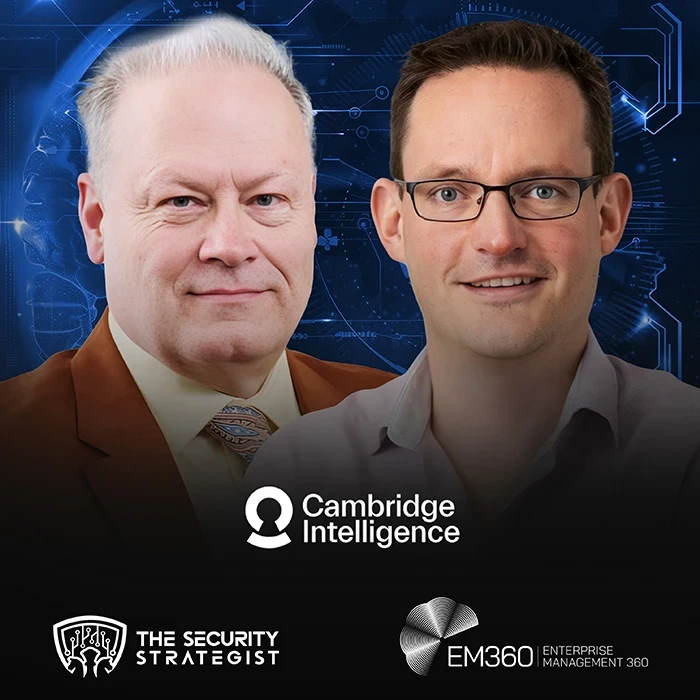
In this episode of the Security Strategist Podcast, Dan Williams of Cambridge Intelligence joins John Tolbert of KuppingerCole Analysts to examine how AI and graph visualisation are changing cybersecurity investigations.
We explain how AI agent memory works, why information can be lost or retained, and how enterprises can manage it.


The reported withdrawal follows repeated project delays, with grid officials reportedly warning that a power connection for the Loughton, Essex, site may not be available until the 2030s.

We look at who controls spatial data collected by industrial robots, from sensor readings to 3D maps and reuse rights.

If you can’t see what the AI is doing, you can’t account for it.

Scope: Sekoia Defend, Roy, AI Cases, Elevate, and behavioral detection features
“The NIS2 Directive should not be approached as a compliance issue, but as an opportunity to improve the level of cybersecurity.”

Learn what Sekoia's Agentic SecOps platform lets you do.
The upgrade comes after OpenAI shut down its Atlas browser.

As enterprises become more dependent on shared technology, underfunded maintainers and infrastructure providers can leave them facing unexpected costs that were not factored into the original decision to adopt it.
OpenAI also released ten summaries of the model’s reasoning and an estimate of the compute used.

As shadow APIs multiply and AI fuels reconnaissance, enterprise security faces a blind spot. Radware’s Uri Dorot and KuppingerCole’s Jonathan Care explain how to stop stealthy API attacks.
Reflection AI’s first open-weight model targets coding and AI agents, while reported talks with Nvidia highlight the strategic importance of more customisable AI systems.
We explain why cloud SLAs can overlook slow serverless requests and what enterprises can do to manage performance.

The Financial Stability Board has issued final guidance urging financial institutions to strengthen controls over autonomous AI systems, including risk-based requirements for human approval of higher-risk actions.
We explain how CVSS, EPSS and CISA KEV help prioritise vulnerabilities based on real-world risk.
When employees can work from anywhere, how can organisations protect their data and prevent unauthorised access in the event of device loss or theft?
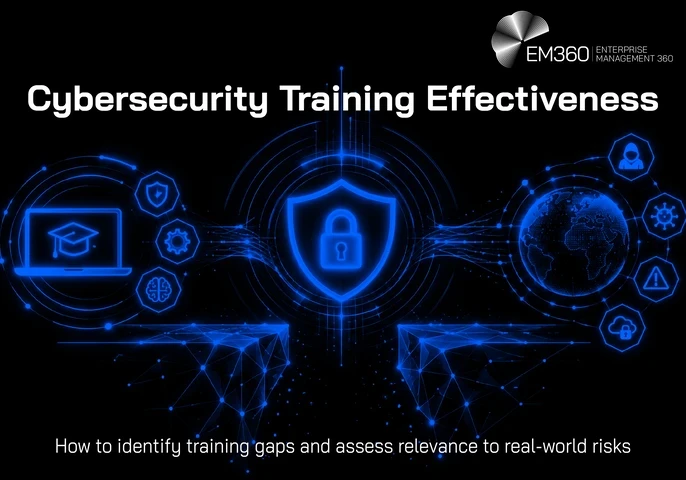
Why does cybersecurity training fail to deliver the intended results? Explore how organisations can identify gaps in training, assess its relevance to real-world risks and determine what needs to change to improve its effectiveness.

We report on Google's latest commitment to give European scientists access to advanced AI models and cloud computing resources.
Get the latest insights, analysis and tech news delivered straight to your inbox
Filters