
Would you upload your mind to a computer? And if you could, would it be…you?
Imagine a version of you that could think, feel, and exist long after your body is gone. Welcome to the world of mind uploading.
In this article we’ll tell you everything you need to know about mind uploading, including how it works, when we’ll have access, examples, and more.

What is Mind Uploading?
Mind uploading is the process of scanning a person's brain, mapping it out and using this to recreate it digitally.
Though the process is still largely theoretical, research into brain-computer interfaces, AI simulations, and neural mapping is inching us closer to the possibility of digital consciousness.
The goal is not just to simulate a person's behaviour, but to replicate the processes that produce thoughts and consciousness itself.
The mind uploading process follows the idea that every memory, thought and decisions you’ve ever made could be scanned, mapped and transferred into a computer.
This wouldn’t be a simulation but a functioning digital “mind.”
Transhumanists think that mind uploading is an essential, and natural, next step in the evolutionary process.
Transhumanism is the movement based on the idea that we can, and should, use technology to improve humans beyond natural limits.
How does Mind Uploading Work?
Mind uploading does not currently exist. But the science behind it is advancing rapidly.
While the exact method is still theoretical, most approaches fall into two broad categories: copy and upload, or copy and delete.
Copy and upload methods involve scanning and mapping the brain to create a digital replica. In this version, the original biological person remains alive.
The result of the process would be two versions of the same individual: one physical, one digital existing simultaneously.
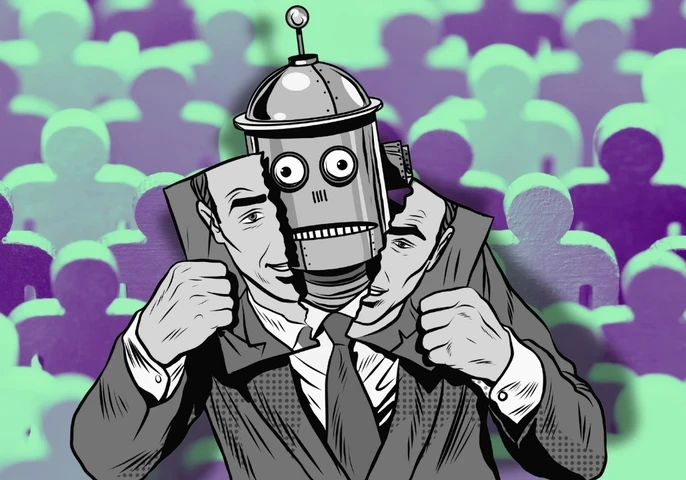
This raises the obvious question: if both versions exist at the same time, which one is really “you”?
If possible, the digital version may behave identically, but it would still be a copy rather than a continuation of consciousness.
In copy and delete methods, the brain is scanned and then actively destroyed by the process, leaving only the digital version behind.
In this version,the idea is that by removing the original, continuity of consciousness is preserved, there is no “duplicate,” only a transfer from biological to digital form.
However, this introduces an even deeper problem. Even if the digital mind behaves exactly the same, there is no guarantee that subjective experience, the feeling of being “you”, has actually transferred.
Though transhumanists may see it simply, mind uploading is not just a technical problem, but a philosophical one. It raises fundamental questions about identity, continuity, and what it really means to exist.

When AI Sanctions Reshape Ties
How Western export controls are pushing Russia’s GigaChat toward Chinese chips and deepening a new AI and semiconductor alignment.
Mind Uploading vs Digital Immortality?
Mind uploading and digital immortality are related through their goal being to ‘live on’ beyond the biological body.
Digital immortality is the storing of someone's personality and mind digitally.
This could be achieved through mind uploading. The goal is of both that a form of you will be able to survive beyond the natural lifespan.
While digital immortality focuses on preserving identity, mind uploading refers to the theoretical process of recreating consciousness itself.
Digital immortality is a copy of behaviour, seen in chatbots trained on deceased relatives texts for example, while mind uploading attempts to preserve subjective experience.
When Will Mind Uploading Be Possible?
Mind uploading is currency theoretical. However experts believe partial mind uploading will be possible within the next 10-30 years.
Digital personas built using services like Replika or Eter9 are already used to create AI chatbots based on deceased loved ones.
The bots are trained on messages, emails and social media posts to mimic personality traits and speech patterns to offer a sense of continued life to those grieving.
It’s important to note though that this AI is only an approximation, it doesn’t “think” or “feel” like the person so it can not be considered a form of mind uploading.
Full mind uploading, where a digital copy of your consciousness could actually think and experience independently, is a lot more difficult.
We currently understand very little about the human brain. Science would not know where to start with mapping every neuron and synapse. We also do not understand how subjective experience would arise from neural networks.
Beyond this, there are the ethical and legal challenges to consider, for example what rights would a digitised human have? And who owns a digital mind?


Comments ( 0 )