German military drones provided by the defence technology company Quantum Systems are flying again after being grounded temporarily following a cyberattack.
The company confirmed on Friday 13th of November that its fleet was operating normally following an incident detected at the end of October.
The attack drove Germany’s armed forces to suspend the use of the company’s drones as a precaution while the disruption was investigated.
According to Reuters, the incident also blocked Quantum Systems from contributing to a recent military exercise.
The company said its security teams had controlled the threat with the assistance of authorities, but the investigation remains ongoing.

The attack underlines rising cybersecurity concerns throughout Europe’s defence industry, specifically as manufacturers supplying technology to Ukraine experience escalating security vulnerabilities.
Cyberattack Forces German Military to Ground Drones
Quantum Systems, a German manufacturer of “unmanned” aerial vehicles (UAVs), announced the cyber incident on Thursday.
In a company statement, Quantum Systems said an internal investigation had spotted an “active cyberattack” by what it labelled as “hostile actors.”
The firm said its IT and security teams “contained” the threat through teamwork with government authorities and external cybersecurity experts.
It also reassured customers that there was no risk to people operating its unmanned systems:
“Through the quick measures taken and the characteristics of the incident, there is no risk in operating Quantum Systems’ unmanned systems for the end users and the operators."
According to the Financial Times, Germany’s Bundeswehr temporarily “grounded” the company’s drones as a “precaution.”
The decision also prevented Quantum Systems from taking part in a recent military exercise.
Malicious Software Raises Supply Chain Security Concerns
The attack allegedly stemmed from a malicious update file. It was distributed through a server used to provide updates for Quantum Systems’ QBase ground-control and mission-planning software.
According to the Financial Times, the incident compromised the firm’s software update infrastructure, raising concerns about the security of systems supplied to military clients.
The company detected the incident towards the end of October. Yet, it has not publicly identified the attackers or revealed their intentions.
Quantum Systems said the incident had been “reported to the relevant authorities” and remained “under investigation.”
The case demonstrates cybersecurity vulnerabilities associated with software supply chains.
Institutions depend on technology providers to deliver reliable updates, meaning security incidents at suppliers can have big repercussions for their customers.
European Defence Industry Faces Growing Cyber Threats
The incident comes amid broader concerns about cyberattacks targeting European defence companies.

Quantum Systems said the European defence industry had been confronted by persistent cyberattacks for years, specifically industries assisting Ukraine.
“Companies at the forefront of supporting Ukraine are being targeted precisely because our work is critically relevant to customers’ security,” the company said.
Quantum Systems has operations in Ukraine and works with Ukrainian partners.
According to the Financial Times, it hires “more than 200 staff” in the country and has “three joint ventures” partaking in manufacturing unmanned systems.
Germany’s domestic intelligence agency had earlier cautioned an increase in risks facing the country’s defence industry. These include cyberattacks, espionage and sabotage, mainly against companies supporting Ukraine.
However, there is still no confirmation identifying who was behind the Quantum Systems attack.
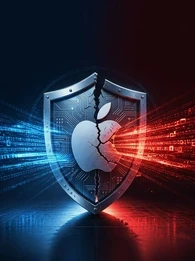
When Supply Chains Expose IP
Apple’s Tata breach shows how contract manufacturers now hold the most sensitive design data, reshaping third‑party risk and sourcing strategy.
What Happens Next for Quantum Systems?
The company said its “fleet” was operational again in light of the measures taken to isolate the cyberattack.
The incident is still being investigated in collaboration with government authorities and internal and external cybersecurity experts.
Quantum Systems has not unveiled the overall severity of the attack or identified those responsible.
For Europe's defence industry, the case emphasises the importance of protecting software supply chains, safeguarding internal systems and upholding stability when technology suppliers encounter cyber risks.
As defence manufacturers become more reliant on linked software and technological systems, cybersecurity will continue to be a vital part of defending the systems and services they deliver.

Comments ( 0 )