
Hong Kong is carving itself out as an economic hub for the new age.
Recent figures first published by Bloomberg reveal that the metropolis alone accounted for more than half of China’s massive $239 billion chip imports.
The race to secure AI computing power is easily the defining technology battle of the decade.
Crucially, trade with China has expanded by nearly 50 per cent since May last year. This is the highest rate of growth since 1992.
The city operates as a free port, differing from the mainland's financial restrictions and bureaucracy that make it more difficult for trade. Driven by the rapid buildout of AI infrastructure Hong Kong has proved itself essential to the new commercial system across Asia.

Organisations of all sizes are investing heavily in generative AI and the game changing large language models it facilitates for enterprise applications. As a result the access to high performing semiconductors is incredibly strategically important.
Despite the US tightening export controls to limit China's access to AI hardware the demand for chips has not slowed.
China's AI Ambitions Drive Demand
Chinese tech firms continue to invest in AI infrastructure to keep up with the computing power demand needed to train models, expand cloud services, and stand a competitive chance in the AI economy.
The trade restriction simply reshaped the way AI hardware is traded. Hong Kong serves as a gateway through its established logistics networks to facilitate the movement of AI chips into mainland China.
Hong Kong exported almost $159 billion of AI-related tech last year, making it the fifth largest exporter across Asia.
Notably, the majority of Hong Kong’s semiconductor shipments were re-exports, with approximately 80 per cent of them heading to mainland China.
Global Impact
The AI boom shows no signs of slowing, meaning the semiconductor industry is forcing companies globally to rethink how the vital hardware is sourced, manufactured, and distributed.
Demand for fundamental tools like AI accelerators and high-performance GPUs outpaces physical supply. Alongside traditional semiconductor trade routes evolving leading to regional hubs like Hong Kong carving out its niche.
Manufacturers, distributors, and governments invest heavily in more resilient, diversified supply chains in order to keep pace with the rapidly changing market dynamics.
Export controls, trade restrictions, and national industrial strategies are influencing where advanced semiconductors can be manufactured, traded, and deployed.
As countries compete to secure the infrastructure needed to power the next generation of artificial intelligence, the semiconductor industry is becoming a focal point of both economic and geopolitical competition.
Traditional supply chain models are being reconfigured, with new trade routes emerging and regional technology hubs gaining strategic importance.
Geopolitical competition is a defining force in the semiconductor sector. Export controls, trade restrictions, and national industrial policies are playing a key role in where AI hardware is manufactured, traded, and deployed.
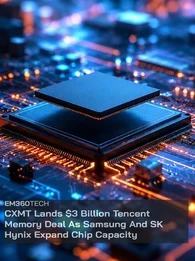
AI Memory Deals Reshape Chips
Tencent and CXMT join Korea’s giants in locking in DRAM, signaling a structural shift in who controls AI data center supply.
It's clear that the changing AI industry is no longer primarily shaped by advancement of technology. The intersection of innovation, policy, and global power dynamics are key points for enterprises and suppliers alike to monitor in response to both technological demand and geopolitical pressure.


Comments ( 0 )