
In this final episode with N-able, the guests answer a pressing challenge for today’s MSPs: How to transform security operations into genuine cyber resilience.
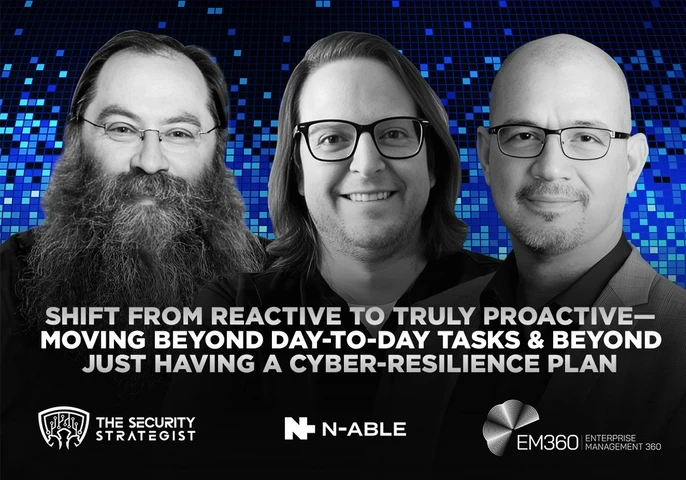
In this episode of The Security Strategist podcast, Jim Waggoner, VP of Product Management at N-able, and Lewis Pope, CISSP and N-able Head Nerd, sit down with host Jonathan Care, Senior Analyst at KuppingerCole.
MSPs have typically focused on technology layers, like backups, EDR, and MDR. However, as both Waggoner and Pope point out during the conversation, achieving resilience requires a bigger change – in operations, culture, and strategy.
Cyber Resilience is Being Prepared For Any Attack
When asked about redefining resilience, Pope underscores the need to move away from a classic technician mindset. He explains that MSPs should adopt a business-focused approach:
“You have to drop your technician glasses and put on your business glasses for a lot of these matters.”
Why is this important? MSPs often have a better understanding of their clients’ workflows than the clients themselves. This puts MSPs in a powerful position, but they must look both inward and outward, Pope further explains.
He emphasises the need for internal threat modelling, risk registers, and long-term business planning with clients: “You need to have that seat there so you can help them, guide them, and put your fingers on the scales of which direction they plan to take.”
Supporting this shift in tackling threats, Waggoner cites an example of tabletop exercises performed at N-able internally. Imagine “you just got a call that someone believes that they've been compromised by ransomware. What do you do?”
The exercise didn’t focus on antivirus tools. Instead, it uncovered operational blind spots—like who to call, what steps to take, and how to keep the business running. The key lesson is that resilience is not about preventing every attack; it's about being prepared for the one that will happen.
Also Watch: How Can MSPs Stay Competitive with Managed Detection and Response (MDR)?
‘Automation Should Strengthen Security Teams, Not Replace Them’
AI and automation are the rage in the cyber technology industry at the moment. While AI offers speed and scale, Waggoner warns it can lead to serious overreactions if not managed carefully: “If you're seeing something that looks suspicious and the automated response is to cut off these services, that can be great.”
The only way to balance a rogue AI and automation situation is “the human,” he added. The VP of Product Management asserts the importance of safeguards such as manual confirmation prompts, human-initiated rollbacks, and analyst reviews. Ultimately, automation should strengthen security teams, not replace them.
“You treat anything and everything that it does as something that a highly clever intern brought to you, but you still have to double-check it,” Pope added to the conversation. The Head Nerd emphasises a key detail often overlooked in AI discussions – precision. MSPs need to distinguish between LLMs, machine learning, and automated processes as each has different risks and policies.
Throughout the discussion, one message stands out – the MSPs who will succeed are those who embrace cultural change, practice operational readiness, and use automation wisely.
“You do need to say I've kept your business running. Constantly, it has not gone down,” Waggoner states. In a world where cyber incidents are a matter of when, not if, resilience is now an expectation, not just an added service.
Also Watch: EDR, XDR, or MDR — What’s the Real Difference and Why Does It Matter?
Rethinking EDR, XDR, MDR
Why real-time response lags despite advanced tools, and how CISOs must reset expectations and maturity around managed detection.
Takeaways
- Cyber resilience is about keeping businesses running during attacks.
- MSPs must shift from reactive to proactive security measures.
- Compliance is becoming increasingly important for all businesses.
- Operational and cultural changes are essential for resilience.
- Automation and AI can enhance security but require human oversight.
- MSPs should conduct tabletop exercises to prepare for attacks.
- Building partnerships can help MSPs enhance their services.
- Resilience planning should be an ongoing process, not a one-time effort.
- Understanding client operations is crucial for effective security.
- Urgency in response is key to managing cyber threats.
Chapters
- 00:00 Introduction to Cyber Resilience
- 02:47 Defining True Cyber Resilience
- 05:52 The Role of MSPs in Cyber Resilience
- 09:04 Compliance and Its Growing Importance
- 12:04 Operational and Cultural Changes for Resilience
- 14:59 The Impact of Automation and AI
- 18:06 Turning Compliance into Resilience Programs
- 20:58 Advice for Building Cyber Resilient Businesses

At N-able, our mission is to protect businesses against evolving cyberthreats with an end-to-end cyber resiliency platform to manage, secure, and recover. Our scalable technology infrastructure includes AI-powered capabilities, market-leading third-party integrations, and the flexibility to employ technologies of choice—to transform workflows and deliver critical security outcomes. Our partner-first approach combines our products with experts, training, and peer-led events that empower our customers to be secure, resilient, and successful. Learn more at n-able.com


Comments ( 0 )