
Imagine spending months assessing your workforce, identifying skills gaps and building a training programme, only to discover that the jobs you're preparing people for have already started changing. It's a very real possibility as enterprises begin introducing agentic AI into their operations.
These AI systems can plan and carry out tasks with less human involvement, which means they're changing more than how quickly employees can get things done. They're also changing what employees actually need to know. And organisations are struggling to keep up.
According to Deloitte's 2026 Global Human Capital Trends report, 85 per cent of surveyed leaders consider workforce adaptability critical, but only seven per cent say they're leading in helping employees continuously grow and adapt. The problem is that traditional AI skills gap analysis can only tell organisations so much if it's based on job requirements that are already becoming outdated.

To prepare employees for what's coming, businesses need to understand how their work is changing before they can identify the skills they'll need. This is where Eightfold AI's approach to skills-based talent management becomes relevant.
By helping organisations understand the skills and capabilities already within their workforce, it provides a starting point for identifying gaps as AI changes the work employees are expected to do.
Why Traditional Skills Gap Analysis Falls Short
Most skills gap assessments start with a fairly straightforward question. What skills does someone need to do their job, and which of those skills do they currently have? HR teams can then compare the two, identify what's missing and decide whether employees need additional training or whether the organisation needs to recruit someone new.
There's nothing inherently wrong with this approach. The trouble starts when the job itself changes faster than the assessment can keep up. Take a financial analyst, for example. They might spend their day pulling together data, checking figures and preparing reports before explaining the results to managers.
A traditional skills assessment would focus on how well they handle each of those tasks. Now imagine their company brings in AI agents to take care of the reports and preliminary checks.
Instead of preparing the information themselves, the analyst spends more time investigating unusual figures, checking the AI's recommendations and advising managers on what to do next. They're still a financial analyst, and they'll still need financial expertise. However, the balance of their responsibilities has changed, along with the skills they need to perform them.
The scale of this challenge is becoming clearer. The 2026 CHRO Study by the IBM Institute for Business Value found that only 26 per cent of surveyed organisations clearly define which activities are led by people, assisted by AI or carried out by AI. If businesses haven't established who will be doing what, how can they accurately assess whether their employees are prepared to do it?
Start With the Work AI Will Change
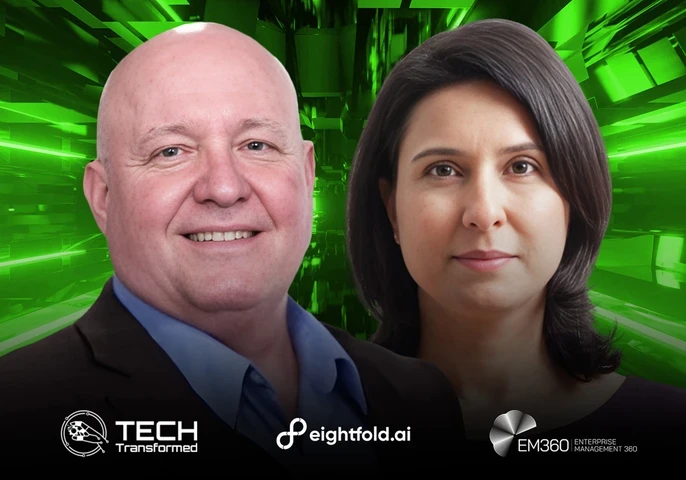
Before looking at employee skills, organisations need to get a clearer picture of what their jobs might actually involve once AI agents become part of their operations. This is something Meghna Punhani, Chief People Officer at Eightfold AI, discussed during an EM360Tech Tech Transformed podcast episode on AI and talent management.
"All these years obviously the work was designed for people, right? Not for agents." Punhani's observation gets to the heart of the problem. Most enterprise workflows were built around people performing particular tasks. Adding AI agents to those workflows changes how the work gets done, but businesses don't always reconsider the responsibilities attached to each role.
AI Reshaping the Talent Model
CHROs are rebuilding jobs, skills and mobility as AI agents enter the workforce, shifting talent from static roles to dynamic, skills-based systems.
So, rather than starting with job descriptions, HR and technology leaders should look at the actual work taking place across the organisation. A useful place to begin is a department that's already introducing AI. HR and technology leaders can sit down with employees and their managers to go through everyday processes, looking at which tasks AI might take over and which will still need someone to handle them.
In recruitment, for instance, an AI agent could help schedule interviews, respond to common candidate questions or put together initial assessments. Recruiters would then have more time to spend reviewing candidates and speaking to hiring managers, rather than organising appointments and chasing information.
They also need to be realistic about what the technology can manage. An AI agent might perform well during a trial but struggle with unusual cases or incomplete information. Before handing over a task, businesses should establish where someone will need to check the results, step in or make the final decision.
This gives them a more realistic view of how responsibilities could change. And with that picture in place, they can begin working out what employees will need to do their jobs well.
Identify the Human Skills the New Work Requires
Once businesses understand how AI will change their workflows, the next question is what their employees will need to know. Some of the requirements will be relatively obvious. People working with AI agents may need training on how the systems operate, how to interpret their results and what to do when something goes wrong.
Not everyone will need advanced technical skills, though. A customer service team using AI agents to answer routine enquiries, for instance, could find that employees spend more of their day dealing with complicated complaints.
They'll still need the same patience, judgement and communication skills they've always used, but those abilities could become a much bigger part of their jobs. Those aren't new skills, but employees may need to use them more often, or at a higher level than before. There's also the question of what happens to the skills people stop using.
Inside Agentic Talent Platforms
Architect the data and AI layer that unifies global skills signals, talent intelligence and high-volume recruiting workflows.
IBM's CHRO research found that 60 per cent of surveyed employees said skill erosion was affecting them. It's an important concern because some of the tasks AI can take over are also the tasks through which employees develop experience. A junior analyst who no longer prepares reports manually, for example, may have fewer opportunities to learn how the figures fit together.
They could become very good at reviewing AI-generated reports without developing the underlying knowledge needed to recognise when something is wrong. That leaves HR leaders with two things to consider. They need to identify the future workforce skills employees will require, while also deciding which existing capabilities need to be maintained.
This is why a general AI training programme won't necessarily solve the problem. Someone responsible for checking financial reports will need different capabilities from an employee using AI to manage customer enquiries. The requirements have to reflect the work people will actually be doing, including the decisions they'll remain responsible for making.
Compare Future Skills Needs With Existing Workforce Capabilities
With a clearer understanding of future requirements, businesses can finally turn their attention to the skills their employees already have. This sounds straightforward enough. Most organisations have employee records, training histories, qualifications and performance assessments they can use to build a picture of their workforce.
Unfortunately, that information doesn't always tell the whole story. Someone might have spent years developing useful skills outside their current role, or gained experience through projects that aren't reflected in their job description. Others may have capabilities their managers simply haven't had an opportunity to see.
This is where skills intelligence can be useful. By bringing together information about employees' experience, abilities and development, organisations can gain a more complete understanding of the talent they already have.
A skills record can tell you what someone has studied or worked on, but it's harder to tell how confidently they can put that knowledge to use. Take an employee who's completed a course on AI oversight. They might understand the principles but still struggle to spot a questionable recommendation when they're working with a real system.
The Cost of Sidelining HR in AI
Exposes the strategic risk of excluding HR from AI decisions, from missed skills to weakened employer brand in the competition for talent.
Practical assessments, previous work and feedback from people who've seen those skills in action can help establish how capable someone really is. Once businesses have this information, they can compare it with the requirements identified during their review of changing workflows.
The aim is to understand where employees are already prepared, where they have related skills that could be developed and where important capabilities are missing. Some gaps will deserve more attention than others.
If an employee lacks a skill needed to oversee an AI system involved in financial decisions, that's likely to be more urgent than a capability the business might need in a few years. There's also no guarantee that every prediction about future work will prove accurate. AI technology is changing quickly, and businesses will learn more about what their systems can handle as they use them.
A useful workforce capability assessment should therefore give leaders enough reliable information to make decisions now, without assuming that today's predictions are permanent.
Turn Skills Gap Findings Into Workforce Decisions
Once an organisation understands where its skills gaps are, it can start deciding how to address them. For some employees, targeted training may be enough. Others may already have experience that would be useful in another role, even if they haven't worked in that department before.
An employee who has spent years working with financial controls, for example, could bring valuable experience to a team introducing AI into its financial processes. They'd understand what can go wrong and which checks are important, although they'd probably need some training on the new systems.
Looking at employees' wider experience can help businesses find opportunities for internal mobility and make better use of the people they already employ. Of course, some gaps will still require external hiring. The important thing is that these decisions are based on a realistic understanding of what the organisation needs, rather than assumptions about which skills belong to particular job titles.
When Vector RAG Stops Working
Why retrieval strategy now hinges on matching Vector, Graph and hybrid RAG to the questions AI must answer across complex enterprise data.
HR teams can't make those decisions alone, either. They'll need to work with technology leaders to understand what the AI systems can actually handle, and with department managers to establish where employees need training or extra support. And as those systems develop, workforce requirements will need to be reviewed.
A task that initially requires close human supervision might eventually need less involvement, while another could prove more complicated than expected. Keeping workforce planning connected to those changes will help businesses invest in the capabilities they actually need.
Final Thoughts: Future Skills Start With Understanding Future Work
The biggest risk with AI skills gap analysis isn't necessarily missing a skill. It's preparing employees for responsibilities that are already changing. As AI agents take on more work, enterprises need to reconsider what they're asking people to do, which capabilities they'll still rely on and where new expertise is needed.
Otherwise, even the most thorough skills assessment could leave organisations investing in training that doesn't prepare employees for what's coming. The real shift is in how businesses approach workforce planning. Skills assessments can't remain tied to fixed job descriptions when the work itself is becoming more fluid.
They need to reflect what's happening across the organisation, recognise capabilities employees already have and help leaders make better decisions about where to develop, move or recruit talent. This is where the conversation around skills intelligence becomes particularly relevant.
Eightfold AI's approach to enterprise talent management reflects the growing need to understand workforce capabilities beyond job titles, while EM360Tech's wider insights into AI and the future of work continue to explore what these changes mean for enterprise leaders. Because preparing people for an AI-powered workplace starts with understanding the work they'll actually be doing.

Comments ( 0 )