
The 2026 Nobel Prizes have celebrated achievements in science, literature and public life, honouring individuals whose work has helped our understanding of the world and tested accepted ideas.
These prestigious annual awards are given in six categories: Physiology or Medicine, Physics, Chemistry, Literature, Peace and Economic Sciences. This year's winners (or laureates as they’re known) have been honoured for achievements ranging from pioneering neuroscience and advances in neutrino astronomy to innovative chemistry, literary experimentation and the fight for international justice.
The awards celebrate the discoveries that have provided the greatest benefits to mankind and were founded through the will of famed Swedish inventor Alfred Nobel, who invented dynamite and held 355 patents throughout his lifetime.

The awards cross many disciplines, but this year’s laureates demonstrate how scientific discovery, creative thought and a commitment to human advancement can uncover new possibilities and alter how we view the world around us.
Nobel Prize in Physiology or Medicine: Karl Deisseroth, Peter Hegemann and Georg Nagel
The 2026 Nobel Prize in Physiology or Medicine has been awarded jointly to Karl Deisseroth, Peter Hegemann and Georg Nagel for their discoveries of light-gated ion channels and optogenetics.
Their work contributed to the development of optogenetics, a technique that allows scientists to control the activity of specific nerve cells using light. The technique has transformed neuroscience, giving researchers a means to get a better look at how neurons contribute to complex brain functions and behavior.
Hegemann and Nagel identified light-sensitive proteins called channelrhodopsins, and Deisseroth developed methods to use those proteins to control the activity of nerve cells. Together their discoveries gave scientists a powerful new tool for exploring the brain.
With this level of precision, scientists are now able to look at the relationships between neural activity and functions such as movement, sensation and behavior that was previously difficult to achieve.
Optogenetics might also aid studies of neurological and psychiatric disorders, and enhance researchers’ understanding of the brain. It is valuable for helping scientists understand how specific neural circuits work, but translating these research techniques into clinical treatments is a different challenge that has to be addressed.
The award highlights the value of basic scientific discoveries in the development of new tools that can be employed in research across a wide range of disciplines.
Nobel Prize in Physics: Francis Halzen
Francis Halzen, winner of the 2026 Nobel Prize in Physics, has been awarded for his decisive contributions to the IceCube Neutrino Observatory and the discovery of high-energy neutrinos of astrophysical origin.
Neutrinos are tiny particles that hardly ever interact with other matter. They travel through space and can pass through large amounts of matter such as the Earth. Neutrinos leave no detectable trail very often. This makes them difficult to study, requiring specialized instruments to catch the rare times they interact with other particles.
Halzen realized that the clear ice below the South Pole could provide a huge medium for detection. The resulting IceCube Neutrino Observatory detects faint flashes produced in the interaction of neutrinos with atomic nuclei by using thousands of light sensors embedded in the Antarctic ice.
The observatory has about a cubic kilometer of ice and enables scientists to detect particles from extremely energetic phenomena happening in distant parts of the universe.
Unlike light, which can be absorbed or scattered by matter, neutrinos (in this case called “ghostly messengers”) can carry information from even the most extreme environments in the universe. Studying them, astronomers have found one more way to probe the origins of high-energy cosmic phenomena and what drives them.
![In the latest development, China’s government, on a broadcast on CCTV, announced earlier today [Thursday, June 18, 2026] that the country’s commercial ministry will introduce 17 measures to integrate AI applications in the consumption sector.](/sites/default/files/styles/content_card_secondary/public/2026-06/china-announces-17-ai-measures-consumer-sector.jpg.webp?h=2cb24fdd&itok=5embWPvb)
China’s AI Consumer Pivot
Beijing’s 17-point plan turns homes, retail and services into AI testbeds, with subsidies, standards and clusters to unlock new consumer demand.
Halzen's work has helped to establish neutrino astronomy as a valuable complement to more conventional astronomical observations. This is now helping to expand the range of methods scientists can use to investigate the workings of the universe.
Nobel Prize in Chemistry: Henri B. Kagan and Kenso Soai
Henri B. Kagan and Kenso Soai have been awarded the 2026 Nobel Prize in Chemistry for the discovery of non-linear effects and of autocatalysis in asymmetric synthesis of organic compounds.
Their research explores the ways in which chemical reactions can be directed to create more of one type of a molecule than its mirror image can.
Many molecules have two forms that are mirror images of each other, like your left and right hands. They have the same atoms but different shapes, which can affect how they interact with other substances.
This is especially important in biology where one form of a molecule may behave differently from another inside the human body.
The effects of a compound may depend on the type of molecule. The body can react differently to one form of a molecule than it does to another, so knowing how to make one form rather than the other is important in creating medicines and other chemical products.
Kagan's work has developed methods to synthesize molecules with a desired chirality. By contrast, Soai’s work showed how a slight initial difference between two mirror-image forms of the same molecule can be amplified by autocatalysis, where a chemical reaction helps to make more of itself. This can cause one form to be more common than the other.
These results help explain how one variant of a molecule can become more abundant than its mirror image. They also could help scientists understand how this imbalance first arose in the molecules essential for life, though how exactly it did is still unknown.
The award recognises fundamental work that has helped explain how chemical reactions can be directed towards producing particular molecular structures.
Nobel Prize in Literature: Anne Carson
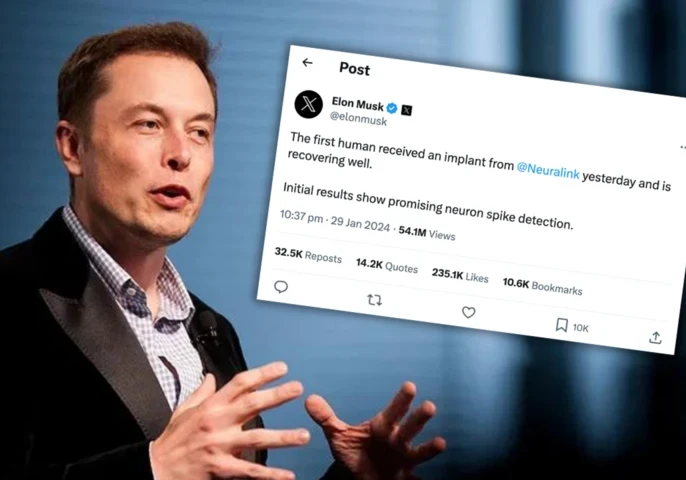
Neuralink’s Brain-Device Stack
Breaks down how electrodes, chips and software translate neural signals into cursor movement, and what this model means for human-computer control.
The 2026 Nobel Prize in Literature is awarded to the Canadian writer Anne Carson "for her daring and original work, which embraces the classical tradition while forging new ways for contemporary literature".
Carson is known for writing that traverses poetry, essays, translation and other literary forms. Her work often addresses ancient Greek literature and philosophy, engaging classical ideas in a conversation with contemporary questions of language, identity, memory and human experience.
Carson likes to play with genre, mixing different styles and modes of expression, rather than looking at literature as fixed structures. This has helped distinguish her work from contemporaries.
Her writing also reveals how relevant classical texts are to the modern reader by giving new interpretations and creative approaches.
The prize celebrates the importance of literary experimentation and the ongoing influence of classical traditions on contemporary writing.
Nobel Peace Prize 2026: Navanethem “Navi” Pillay
The 2026 Nobel Peace Prize has been awarded to Navanethem “Navi” Pillay, a South African jurist and former United Nations (UN) High Commissioner for Human Rights, for her efforts to promote peace and international law.
Born in Durban in 1941 to a family of Indian Tamil origin, Pillay built a distinguished legal career during which she challenged discrimination and helped strengthen international mechanisms for holding perpetrators of serious crimes accountable.
During apartheid, she defended Nelson Mandela and other anti-apartheid activists. In 1967, she became the first woman to establish a law practice in what was then the province of Natal. She later became the first non-white woman to serve on South Africa's High Court.
Pillay subsequently served as a judge and president of the International Criminal Tribunal for Rwanda, where her work helped establish that and violence could constitute crimes against humanity and genocide. She later served as a judge on the International Criminal Court and as United Nations High Commissioner for Human Rights from 2008 to 2014.
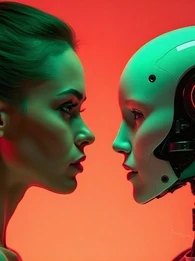
Governing Post-Human Futures
Explores ethical, regulatory and inequality risks as enhancement tech moves from concept to deployment in people’s bodies and minds.
Her work has also involved investigating allegations of serious violations of international law. From 2021 to 2025, she chaired the UN Independent International Commission of Inquiry on the Occupied Palestinian Territory. The commission concluded that Israel had committed genocide in Gaza, a finding Israel has rejected. Pillay has also served as an ad hoc judge at the International Court of Justice in the case concerning allegations of genocide against Myanmar over its treatment of the Rohingya.
The Nobel Committee highlighted Pillay's contribution to the development of an international legal order and her dedication to ensuring the prosecution of war crimes, crimes against humanity and genocide. It also highlighted the importance of international law at a time when legal institutions and established international frameworks are under increasing political pressure.
The award places international justice and the rule of law at the heart of this year’s Nobel Peace Prize. It recognises the role legal institutions can play in addressing conflict, protecting human rights and providing routes to accountability beyond the use of force.
Nobel Prize in Economic Sciences: Robert E. Hall and Michael Woodford
The 2026 Sveriges Riksbank Prize in Economic Sciences in Memory of Alfred Nobel has been awarded jointly to Robert E. Hall of Stanford University and Michael Woodford of Columbia University “for microeconomic foundations of macroeconomic stabilisation.”
Hall and Woodford developed macroeconomic models from the behaviour of individual households and businesses, rather than relying only on statistical relationships between broad indicators such as inflation, production and consumption.
The models help policymakers to assess possible effects of fiscal policies (such as government expenditure and taxation) and monetary policies (such as decisions on interest rates) on the economy as a whole.
This matters for economic policy because expectations can influence behaviour. When governments and central banks communicate their plans, households and businesses may adjust decisions about spending, saving, investment and prices. The models help policymakers assess how fiscal measures, such as changes in government spending and taxation, and monetary measures, such as interest-rate decisions, may affect the wider economy.
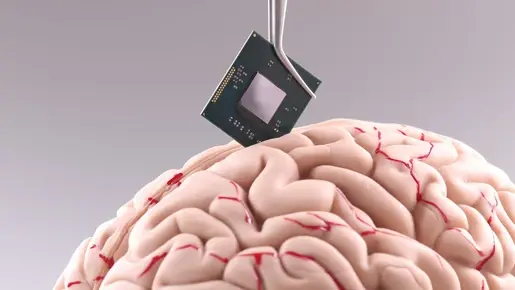
Inside AI Brain Interfaces
BCIs move from war labs to consumer stacks, fusing AI, VR and prosthetics into a new human–machine interface layer executives must plan for.

The work has provided the theoretical underpinning for models used by central banks and governments globally. It can assist policy makers in understanding the interaction of economic decisions, leading to better timing of responses to downturns and other shocks, such as energy crises or sudden changes in household consumption. The purpose of stabilization policy is to smooth out the peaks and troughs of the economy, although the outcome will still depend on the circumstances and on the implementation of policy.
The prize in Economic Sciences, however, was created in 1968 by Sweden’s central bank, Sveriges Riksbank, in memory of Nobel, and is not one of the original five Nobel Prizes established by Alfred Nobel’s will. It was first awarded in 1969 and is administered alongside the other Nobel Prizes.
2026 Nobel Prizes: New Ideas Changing Our Understanding of the World
The 2026 Nobel Prizes show the many ways research, creativity and new ideas can shape our understanding of the world and influence society.
Optogenetics is providing researchers new ways to study the brain in medicine. Neutrino astronomy is aiding scientists to research far away cosmic events in physics.
In chemistry, work on molecular handedness is helping us understand how chemical reactions give rise to different forms of molecules. Anne Carson’s literary work is a good example of how classical ideas can inspire new forms of creative expression.
The Nobel Peace Prize for South African jurist Navi Pillay is an acknowledgment of her work in promoting peace and international law, and emphasizes the value of human rights and legal accountability.
In Economic Sciences, Robert E. Hall and Michael Woodford have received recognition for their contributions to economic models which aid governments and central banks in managing economic fluctuations. Their work lays the groundwork for policies that may reduce the severity of recessions and other economic shocks.
While these accomplishments are in very different fields, they have a common thread: challenging existing ideas can open new avenues for understanding and solving difficult problems.
Together, the 2026 laureates demonstrate how scientific discovery, creative thought and advances in economic and international policy can advance human progress.
For the complete list of laureates and official award citations, please see the 2026 awards page of the Nobel Prize website.

Comments ( 0 )