
In a world saturated with AI hype, authentic conversations about what’s actually happening inside organisations can be hard to find. That’s exactly the gap that data and AI leader Ravit Jain set out to close when he launched The Ravit Show.
Through candid discussions with founders, engineers, CDOs, and investors, Jain has created a platform where leaders openly discuss both their successes and their failures.
In this special Analyst Spotlight, Jain shares what inspired the show, how the relationship between data and AI is evolving, and why community and transparency are becoming critical to the industry’s next phase.

Building a Platform for Honest Conversations
When Jain launched The Ravit Show, his goal was simple: cut through the noise.
“I started The Ravit Show because I felt there was a gap between what companies were marketing and what practitioners were actually experiencing.
I wanted real conversations. Not polished PR answers. Not buzzwords. Just honest discussions about what is working and what is not.
Over time, the mission evolved. It is not just about interviews anymore. It is about connecting the ecosystem. Founders, CDOs, engineers, investors. Everyone is solving a different part of the puzzle. The show became a bridge between them.”
What began as a straightforward interview platform has since evolved into something broader. Today, Jain sees the show as a connector across the data ecosystem.
It was when leaders started opening up about failures.
Not just success stories. But real struggles with adoption, culture, data quality, and ROI.
When I saw how much value people got from those honest conversations, I knew this was needed.”
Data Foundations Will Define the Next AI Wave
AI dominates enterprise technology discussions. But according to Jain, the narrative is now shifting.
“AI will stop being a separate conversation. For a while, everyone talked about AI like it was magic. Now reality is setting in. AI is only as good as the data foundation behind it.
In the next 12 to 18 months, companies will invest more in governance, metadata, data quality, and semantic layers. Not because it sounds good. But because their AI projects will fail without it.”
This shift will also bring broader changes in how organisations structure and evaluate their AI initiatives.
‘First, moving from pilots to production. Many companies experimented. Now they need scale.
Second, ownership. AI is shifting from innovation labs to core business teams.
Third, measurement. Boards are asking for ROI. That will change how AI investments are prioritised.’
Scaling AI Across the Enterprise
While many organisations have experimented with AI, scaling those projects across the enterprise remains a significant challenge. According to Jain, the biggest barrier is often organisational alignment.
“The biggest challenge is alignment.
Data teams build something. Business teams do not fully trust it. IT worries about risk. Legal worries about compliance.
Another challenge is change management. AI changes workflows. That creates resistance.
Organisations need to focus less on the model and more on adoption. Clear ownership. Clear metrics. Start small, prove value, then scale.”
Inside Data-First AI Leadership
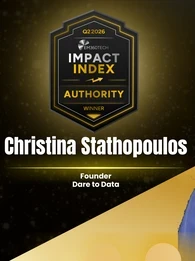
Stathopoulos links data architecture, AI readiness and workforce skills into one operating model for enterprise decision making.
Data Strategy to Real Business Impact
data management practices that once seemed like back-end investments are now proving essential for successful AI initiatives. As organsations push AI systems into production, the importance of strong data governance has become increasingly clear.
“Data governance is no longer optional. Data catalogs, lineage, semantic layers. These used to feel like back office investments. Now they directly impact AI readiness.”
Another trend Jain sees translating into measurable outcomes is the rise of data products — treating data assets with the same discipline as customer-facing products.
“Also, data products. Treating data as a product with owners and SLAs is finally driving measurable value.”
Community Still Matters in Technology
Beyond the technical side of the industry, Jain believes one of the most important forces driving progress is community.
“Community is everything. Technology changes fast. What stays constant is people learning from each other.”
For Jain, open discussion and shared experience help the entire industry evolve faster, especially in a field that is changing as rapidly as AI.
“When leaders openly share what worked and what failed, the entire ecosystem moves faster. Community builds trust. And in AI, trust is the real currency.”
Inside AI’s Hidden Plumbing
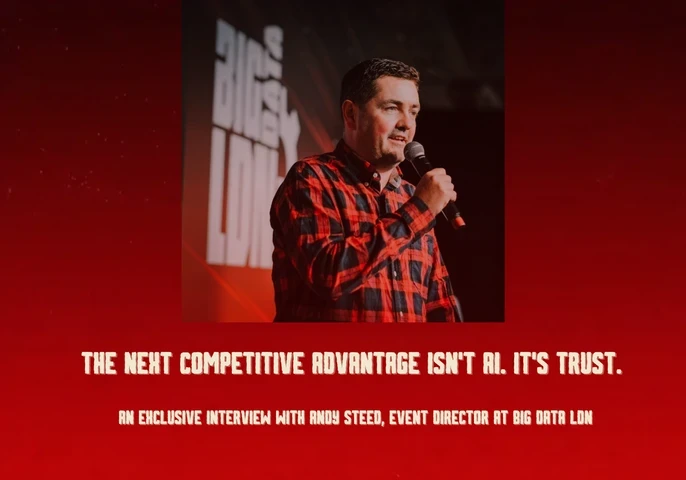
AI fails without resilient data pipelines, governance and infrastructure; this piece reframes AI as a business utility, not an IT project.
The Emerging Voices Shaping the Industry
When asked which voices in the data and AI space he finds most exciting today, Jain highlights a group that often receives less attention: practitioners working inside organisations.
“I am excited about operators. Not just founders or analysts. But people inside enterprises who are building real AI systems under real constraints.”
These professionals, he believes, will play a key role in shaping how AI evolves within real-world business environments.
“Mid level data leaders. AI product owners. Heads of data quality.
They are shaping the next phase of this industry.”
A Practical Approach to AI Strategy
For leaders hoping to turn AI into a competitive advantage, Jain offers a straightforward piece of advice: start with the business problem rather than the technology.
“Stop chasing use cases. Start with a business problem that already has budget and urgency.”
From there, organisations should focus on delivering simple, practical solutions that improve existing workflows.
“Then build the simplest AI solution that improves that workflow.”
Ultimately, Jain sees AI not as a standalone strategy, but as a tool that accelerates what organisations are already doing.
“AI is not a strategy by itself. It is an accelerator. If the foundation is weak, AI will just expose it faster.”




Comments ( 0 )