
In the recent episode of the Don’t Panic It’s Just Data podcast, Shubhangi Dua, Podcast Producer and B2B Tech journalist at EM360Tech, reports on the podcast shot live in London. Guest speakers, Pavel Dolezal, the CEO at Keboola, sit down with Vineta Bajaj, Group CFO, Holland & Barrett.
They get specific about how modern finance leaders move faster: start with one governed source of truth, then layer automation, and only then AI. They explore how the CFO role is evolving. From reporting numbers to also owning the non-financial “whys” behind them.
In the age of the AI boom, that shift turns every CFO into a product owner of data. But as Pavel Doležal puts it, without a clean, connected foundation, AI is just noise.
According to Vineta Bajaj, Group CFO of Holland & Barrett, the role of the CFO has fundamentally changed. Today’s CFO must act as a product owner for data, not just owning the numbers but also determining how data is defined, structured, and used throughout the business.
Finance and Data: A Complete Product
Drawing on her experience with Ocado Group, Rohlik Group (one of the fastest online grocery businesses in the world), and now Holland & Barrett, Bajaj points out that financial problems remain persistent across organisations.
Issues such as slow month-end closes, duplicated processes, delayed reporting, and limited decision-making speed are still common. These challenges are even greater in complex businesses that operate across multiple entities and countries. Differing charts of accounts, outsourced finance teams, and fragmented systems create added friction.
Bajaj stresses the answer isn’t "add another tool." CFOs should treat finance and data as a complete product, one that serves the business as its customer. This requires understanding finance processes, clearly defining financial and non-financial data, and prioritising what has the greatest impact on the business.
The Holland & Barrett CFO further emphasises that CFOs cannot pass this responsibility off to IT or BI teams. When data ownership is outside finance, it becomes someone else’s problem. However, when finance takes ownership of master data and its definitions while working closely with commercial and operational teams, it creates a single source of truth that the entire organisation can trust.
Also Watch: The Real Future of Data Isn’t AI — It’s Contextual Automation
When Context Becomes the Data
Enterprises are shifting from tool-centric stacks to context-rich automation, where data agents unlock value for every business user.
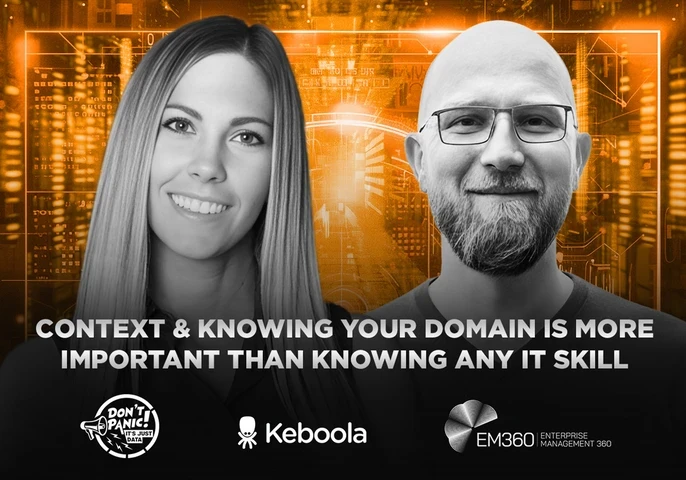
How to Build the Foundation for Real-Time Financial Intelligence & AI
Analytics, automation, and AI only work if the foundations are solid. Before adding AI assistants or real-time dashboards, CFOs must ensure that finance processes are clean, standardised, and automated. Poorly coded purchase orders, late journal entries, and inconsistent definitions can undermine even the most advanced technology.
At Holland & Barrett, this perspective led Bajaj to create a dedicated data function within finance. It ensures accountability for master data, definitions, and governance. The aim is not just to speed up reporting, but to gain deeper insights by linking financial outcomes with non-financial factors such as foot traffic, pricing, customer behaviour, and external influences like weather.
This integrated viewpoint allows finance teams to go beyond explaining variances and focus on the key business question: why performance changed and what happens next. It also opens up self-service analytics, reducing reliance on central BI teams and enabling decision-makers to act in real time.
Bajaj views AI as a powerful tool but not a shortcut. It prompts organisations to quickly address long-standing data and process issues. When data is well-defined and trusted, AI can facilitate scenario modelling, forecasting, and faster decision-making. Without proper discipline, AI merely adds to the confusion.
Ultimately, the future CFO must take an active role. They should engage with data, map out processes, ask difficult questions, and create a clear plan. Those who do will move faster than traditional finance models allow and help their organisations thrive in an AI-driven future.
When Data Governance Drives AI
A deep look at data architecture, governance and composable design as foundations for generative and agentic AI in complex enterprises.

Key Takeaways
- The CFO’s role is evolving from reporter to product owner of data.
- Slow month-end and fragmented processes block fast decision-making.
- Finance must own data definitions to create a single source of truth.
- Financial and non-financial data must be connected to explain the “why.”
- AI only delivers value when financial data and processes are already clean.
Chapters
- 00:00 Introduction: The Modern CFO and Data
- 01:05 What is the New Role of the CFO?
- 03:34 The 3 Biggest Problems in Finance (Month-End, Reporting, Decisions)
- 06:21 Why Every CFO is a Product Owner of Data
- 09:37 Data Ownership: Should Master Data Sit in Finance or IT?
- 13:30 The 3 Steps to Unleash Data Power (Process, Standardisation, Data Lake)
- 17:08 How AI is Forcing Speed and Change in Finance
- 20:25 The Future: Keboola's AI Assistant Roadmap
- 21:36 Wrap-up and Final Thoughts

Keboola is the unified AI & Data orchestration platform that empowers organizations to turn data into business value faster and more securely than ever.
With Keboola, you can build end to end data workflows, automate repetitive tasks, build and run data applications. All under one platform.
Let us show you how to #DoMoreWithData.


Comments ( 0 )